
Last updated October 30, 2026
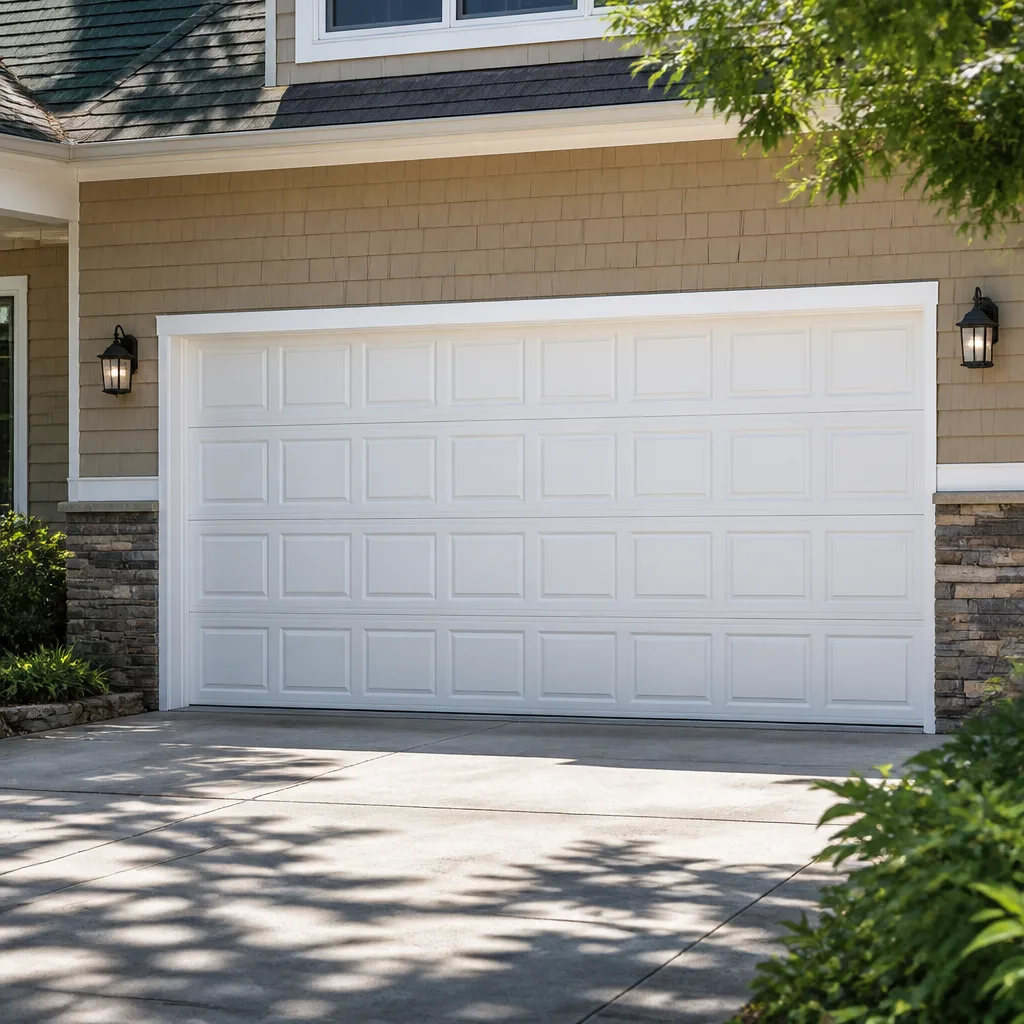 Raised-panel steel
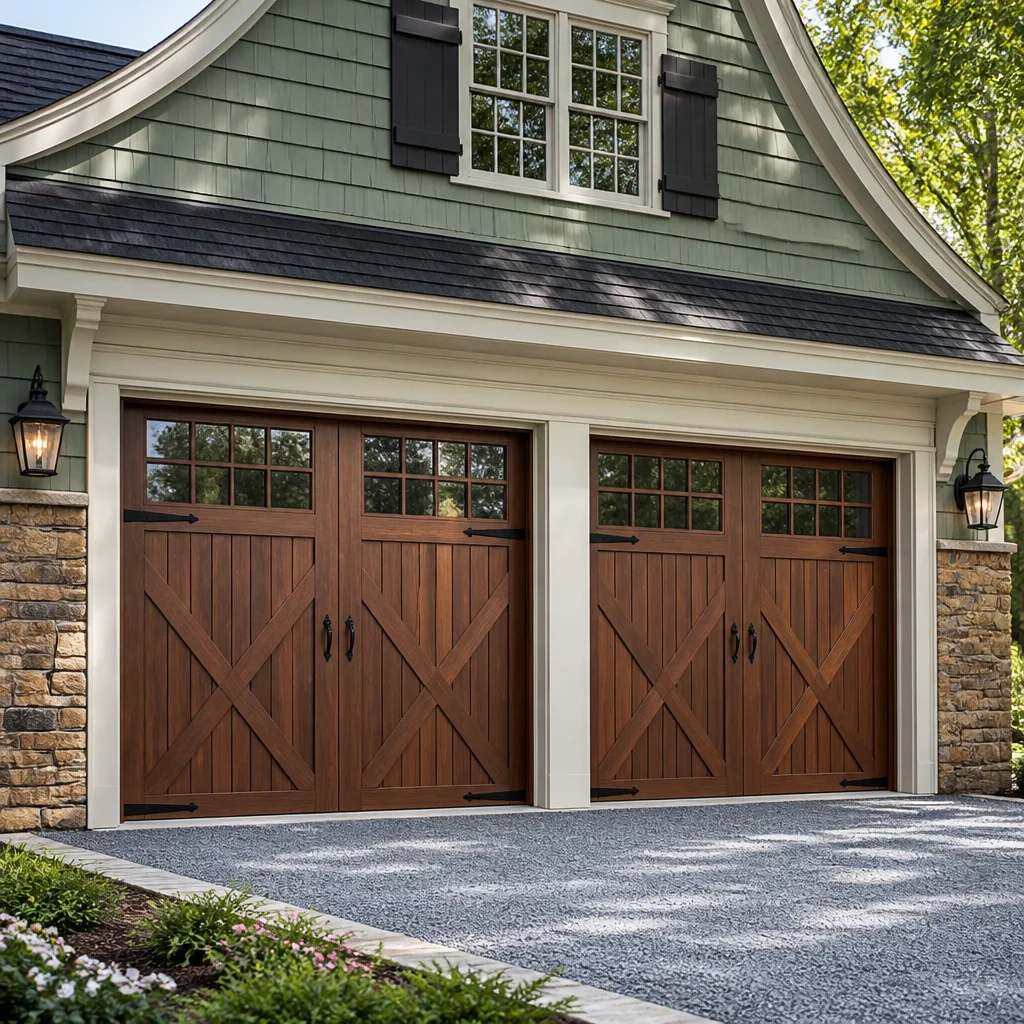 Carriage house
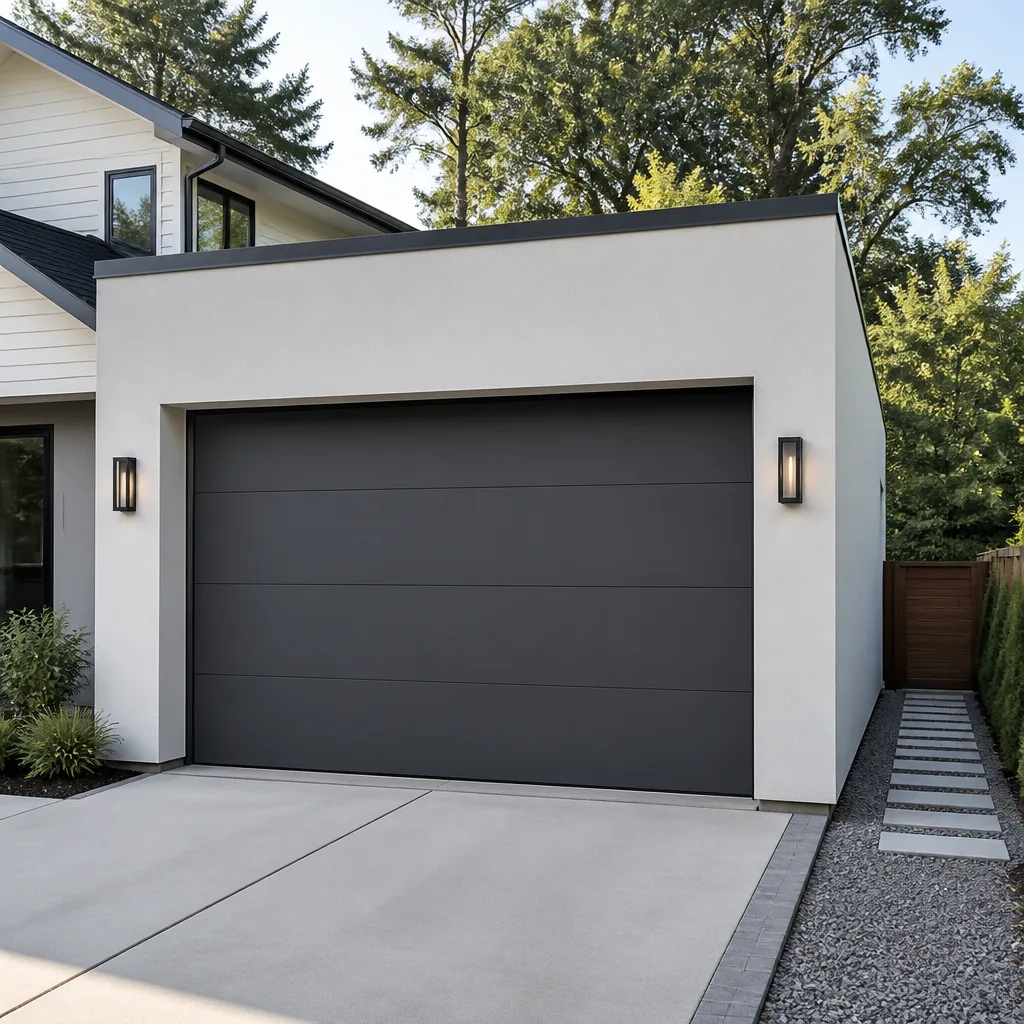 Modern flush
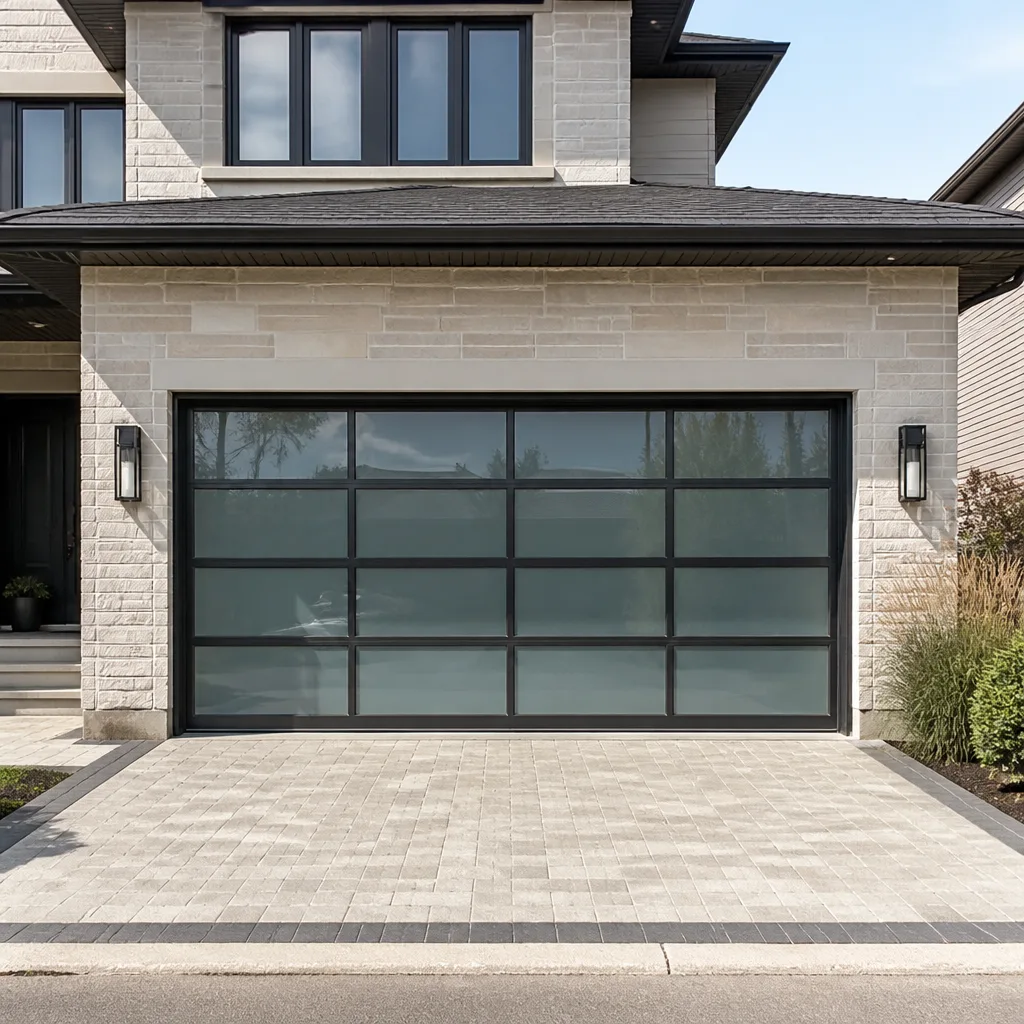 Full-view glass
 LiftMaster openers
 Chamberlain openers
Full 25-point door and opener safety check with every visit - springs, cables, rollers, tracks, and your LiftMaster or Chamberlain opener included
You get a price before we start. It does not change when the truck arrives.
Get your free estimateGarage Door Permits, Codes & Inspections in CA: What You Need to Know
Here’s the thing about garage door permits in California that catches a lot of homeowners off guard: the state’s building code barely talks about garage doors at all. A full replacement in Elk Grove can be a same-day, permit-light job, or it can trigger a Title 24 energy compliance review, a structural inspection, and a demand to bring your 1987 opener up to current code. The difference comes down to details most contractors won’t slow down to explain: whether the garage is attached, what’s above it, whether the door is fire-rated, and which side of a roadway marks the Sacramento County line versus City of Elk Grove jurisdiction. This guide maps that line so you can pull your permit confidently, dodge the three citations inspectors actually write in the Sacramento Valley, and avoid the escrow nightmare a $1,400 door can become when the paperwork never happened.
Quick Answer
In most California jurisdictions, including Elk Grove and unincorporated Sacramento County, replacing an existing garage door with a similar door is considered a “like-for-like” alteration and does not require a building permit, provided you are not changing the opening size, adding a man-door, or converting the garage to living space. A permit is typically required when you alter the opening, install a door on a new garage, or change the fire separation between garage and dwelling. All work must meet CRC R302.5 (opening protection), Title 24 energy requirements for attached garages in Climate Zone 12, and local Sacramento-area enforcement codes. HOA approval is separate from and does not substitute for a city or county permit.
Styles & brands we work with
Table of Contents
- What Triggers a Garage Door Permit in California
- CRC R302.5: The Code Section Most Contractors Skip
- Elk Grove City vs. Sacramento County: Why the Boundary Matters
- Title 24 and Climate Zone 12: The Energy Code Layer
- What a Failed Garage Door Inspection Looks Like
- HOA Approval vs. City Permit: Two Different Processes
- DIY vs. Contractor: Who Pulls the Permit
- What Permits and Inspections Cost in Elk Grove and Sacramento County
What Triggers a Garage Door Permit in California
California building departments operate under the California Residential Code (CRC), which is the state’s adaptation of the International Residential Code. The CRC is mostly silent on garage doors as a specific permit trigger. What triggers a permit is whether the work alters the building envelope, the structure, or the fire separation. Replacing a 16×7 panel door with another 16×7 panel door does not alter the envelope. Replacing a 7-foot-tall door with an 8-foot-tall door does, because it requires reframing the header and moving structural load. Replacing a single-car door with a double-car door does, because it involves cutting into a shear wall.
In our experience at Artisan Garage Door Repair, the confusion usually starts when a homeowner assumes “new door” and “new opening” are the same project. They are not. Here’s the practical breakdown:
- No permit needed: Replacing an existing garage door with a new door of the same size and configuration, same number of panels, same rough opening. This includes swapping a Clopay or Amarr steel door for a Wayne Dalton or Genie-branded equivalent, provided the dimensions match.
- No permit needed: Replacing the opener, tracks, springs, or cables on an existing door. Operational hardware and opener swaps are repairs, not alterations.
- Permit required: Enlarging the opening, adding a second bay where one existed, converting a carport to a garage, or installing a garage door where none existed.
- Permit required: Any change to the fire separation between the garage and the living space, which applies to attached garages and triggers CRC R302.5 compliance review.
- Permit required: Converting the garage to an accessory dwelling unit, office, or any habitable space, even if the garage door stays in place. The door itself would need to meet the wall’s new energy requirements under Title 24.
The quickest way to check: if the rough opening dimension doesn’t change and the garage remains a garage, you’re almost never pulling a building permit in Elk Grove or unincorporated Sacramento County. If the opening changes or the use changes, you are. When in doubt, call the building department directly. Elk Grove’s permit technicians answer the phone and will tell you in two minutes whether you’re exempt under their current interpretation. They’ve heard this question hundreds of times.
CRC R302.5: The Code Section Most Contractors Skip
California Residential Code Section R302.5 governs opening protection between a garage and the dwelling unit. It mandates that any opening in the wall separating an attached garage from the living space be “equipped with a solid wood door or a 20-minute fire-rated door” with self-closing or automatic-closing capability. For the garage door itself, which faces outward and doesn’t open into the dwelling, the CRC requires that the door provide a “barrier” against fire spread, but the specific fire-rating of the large vehicle door is a test standard conversation most residential inspectors in Sacramento County interpret practically: the door must be a listed exterior garage door, installed per manufacturer instructions, with the proper weather sealing for the Climate Zone.
The R302.5 conversation gets more specific when the door sits in the wall separating a garage from a new ADU or from living space added during a remodel. In those projects, the inspector is looking at whether the garage door assembly, including its frame, meets the fire separation distance requirement. That’s when a door that was perfectly acceptable in 1995 becomes a compliance problem.
What we’ve seen in Elk Grove neighborhoods like Laguna West and Sheldon North over the years is straightforward: the inspector is checking three things under R302.5. First, that the garage door assembly doesn’t compromise the required fire separation rating between garage and house. Second, that the man-door between garage and house is solid wood or rated, with a working self-closer. Third, that any penetrations through the garage ceiling or walls are sealed with the proper fire caulk. The garage door itself, the big one, rarely fails an R302.5 inspection unless it was listed for commercial use and landed in a residential opening or the install left gaps that defeat the barrier.
The less-obvious wrinkle: R302.5 also addresses “duct penetration” and “equipment platforms” above the garage. If you have a bedroom above the garage and you replace the door opener, the inspector may check that the ceiling assembly maintains its fire separation. Installing a new LiftMaster or Chamberlain opener with the right mounting does not compromise that separation. Drilling new holes through the garage ceiling for a jackshaft opener can, if the installer doesn’t seal them. That’s one of the forensic details that separates a specialist from a jack-of-all-trades.
Elk Grove City vs. Sacramento County: Why the Boundary Matters
Elk Grove incorporated as a city in 2000, but its building department pulls from Sacramento County’s code tradition. For homeowners, the practical distinction is this: if your address sits within the City of Elk Grove limits, City of Elk Grove Building Department rules apply. If your address says “Sacramento” but sits in unincorporated Sacramento County, the Sacramento County Building Department applies the same CRC, but with different fee schedules, different inspection turnaround times, and different local amendments. The code is largely identical; the enforcement is not.
The boundary matters in a few specific ways:
- Fee structure differs. Elk Grove’s permit fees are flat-rate for like-for-like residential door work, and the department publishes them online. Sacramento County uses a valuation-based formula, meaning the fee depends on the stated project value. The same $4,500 Clopay wood-overlay door replacement would carry different permit costs depending on which side of the city limit line your house sits.
- Inspection scheduling differs. Elk Grove generally offers same-week inspections for residential work. Sacramento County’s unincorporated area has longer lead times, sometimes stretching the final inspection two to three weeks beyond installation. That’s a gap worth planning around if you’re selling the house and need the sign-off in escrow.
- Unincorporated pockets inside Elk Grove exist. Some addresses with an Elk Grove ZIP Code sit within the county’s jurisdiction, not the city’s. The only way to know for certain is to put your address into the City of Elk Grove’s online permit portal or call the county. Homeowners in neighborhoods like Sheldon, Vineyard, and portions of Wilton are the ones most likely to discover they’re not in the City of Elk Grove at all, despite the mailing address.
For garage door projects, the jurisdiction question matters most when a permit IS required. The plan check path, inspection expectations, and certificate of occupancy paperwork all route through the jurisdiction’s specific process. A contractor who works mostly in Sacramento proper may not know Elk Grove’s local amendments. We do, because Artisan Garage Door Repair home operates from Elk Grove and handles permits on both sides of the boundary regularly.
Title 24 and Climate Zone 12: The Energy Code Layer
California’s Title 24 Building Energy Efficiency Standards divide the state into climate zones. Most of the Sacramento Valley, including Elk Grove, sits in Climate Zone 12, which is classified as hot-dry. This climate designation matters for garage door replacement because Title 24 requires that when a garage door is replaced on an attached garage with conditioned space, the new door must meet minimum insulation requirements. The trigger is conditional: if your attached garage is insulated or conditioned with a thermostat or ductwork, the replacement door in Climate Zone 12 must be an insulated model meeting the R-value standard for the zone.
The specific numbers for Climate Zone 12 residential garage doors are:
- R-value minimum: For garage doors in Climate Zone 12, the prescriptive standard for conditioned garages is R-6.5 for the door panel, though many homeowners and builders upgrade to R-12 or R-18 for real-world performance in Sacramento’s 100-degree summers.
- Weather sealing: Title 24 requires that garage door assemblies form a “weather-stripped seal” at the jambs, head, and threshold. This is one of the easiest things to get wrong on a DIY install and one of the simplest things an inspector checks.
- Conditioned vs. unconditioned: If your garage has no ductwork, no insulation, and no HVAC register, it’s considered unconditioned, and Title 24’s door insulation requirement may not apply. But the weather sealing requirement always does, because air leakage through an unconditioned attached garage still costs the house energy.
In our experience with Elk Grove installations, the Title 24 conversation goes one of three ways. A like-for-like replacement on a non-conditioned garage: no energy compliance paperwork. A replacement on a conditioned garage: the new door needs to meet the R-value minimum, and the paperwork goes in the file. A garage conversion to living space: full Title 24 package, including wall insulation, ceiling insulation, and potentially a whole-house energy model. That third path is where the escrow-mistake story from the opening usually starts, because the door gets replaced during the conversion and the energy paperwork never catches up.
What a Failed Garage Door Inspection Looks Like
After handling hundreds of garage door repair in Elk Grove and garage door installation in Elk Grove projects, we know exactly which items Sacramento Valley inspectors flag. The failures are rarely dramatic. They’re usually small, specific, and the kind of thing a homeowner would never notice. The three most common residential garage door inspection citations in Elk Grove and Sacramento County:
- Missing or damaged weather stripping at the head and jambs. Inspector runs a flashlight along the frame, sees daylight, writes it up. This is the top Citation citation in Climate Zone 12 because Title 24 requires the seal and Sacramento’s hot-dry climate makes the gap visible during the day.
- Improperly sealed penetration from the opener’s power and control wiring. The wire from the ceiling outlet to the opener motor passes through the garage drywall into the attic above an attached house. If that hole isn’t sealed with fire-rated caulk, it violates R302.5’s penetration requirement. This is the one DIY installs miss constantly.
- Automatic reverse system not functioning to code. California follows the federal UL 325 standard requiring that garage door openers have an automatic reverse mechanism that stops and reverses the door when it contacts an obstruction. Inspectors will test this on a final inspection, and an opener from the 1980s or a misaligned sensor fails on the spot.
The remedy for any of these is straightforward if you know what you’re looking for. The risk is getting a “corrective action” letter and paying for a second inspection if you don’t. We recommend a quick self-audit before calling for any inspection: run the door, watch the weather seal, check the reverse function manually with a roll of paper towels placed under the closing door, and look at any new penetrations through the garage ceiling or walls. If any of those look questionable, fix them before the inspector arrives. The second-inspection fee is never as cheap as the fix.
HOA Approval vs. City Permit: Two Different Processes
Elk Grove has one of the higher concentrations of HOA-governed communities in Sacramento County, from Stone Springs to Madeira to the newer developments along Bilby Road. These HOAs have architectural review committees with their own rules about garage doors, and those rules have nothing to do with the City of Elk Grove’s building department. Here’s the thing homeowners get wrong: HOA approval is about appearance and conformity. A city permit is about safety and code compliance. Getting one does not get you the other.
Typical HOA garage door restrictions in Elk Grove neighborhoods include:
- Panel style requirements: Many HOAs require carriage-house or recessed-panel doors and prohibit flat or ribbed commercial-style panels, even if the city would approve them.
- Color restrictions: The HOA’s palette may include three or four approved colors, and “white” may not be one of them. The city doesn’t care what color your door is.
- Brand restrictions in some communities: A few newer HOAs specify approved manufacturers. We’ve seen communities where only Clopay and Amarr models are permitted, or where Wayne Dalton’s carriage styles are the only acceptable replacement for the original builder door.
- Timeline requirements: HOAs often require that the door be replaced within 90 days of approval, and that the existing door remains functional and aesthetically passable during that window. The city has no such rule.
If you live in an HOA-governed community in Elk Grove, pull the HOA application first, get the architectural review approval in writing, then determine whether a city permit is required. A good contractor will ask you about HOA status before ordering a door, because getting the wrong panel style or color installed is a $2,000 mistake that no inspector will catch and no HOA board will forgive. Garage door opener repair in Elk Grove is rarely HOA-relevant, since openers are part of the internal mechanical system and not visible, but door replacement always is if the HOA has architectural review.
DIY vs. Contractor: Who Pulls the Permit
California law allows a homeowner to pull a building permit for work on their own residence, and a homeowner who pulls a permit takes responsibility for the work meeting code. In practice, for garage door projects, the permit question only arises in the situations we’ve described: opening alteration, new construction, or garage conversion. For those, clarity about who pulls the permit is essential.
Here’s the reality we see in Elk Grove and unincorporated Sacramento County:
- If a contractor pulls the permit, the contractor’s name is on the permit. That makes the contractor responsible for the inspection outcome and to some extent liable for code compliance. Reputable garage door companies handle this as standard practice on permitted jobs.
- If the homeowner pulls the permit, the homeowner is responsible. Some contractors prefer this because it shifts inspection liability to the homeowner. Others refuse to work under a homeowner-pulled permit because the liability stack becomes ambiguous. Clarify this before the project starts.
- For like-for-like replacements, no permit exists, so the question is moot. The only documentation is the receipt and the manufacturer’s warranty registration. Keep both. If you sell the house, the buyer’s inspector may ask for proof the current door was installed by a licensed company, and a receipt from a specialist beats a Craigslist handyman’s cash note every time.
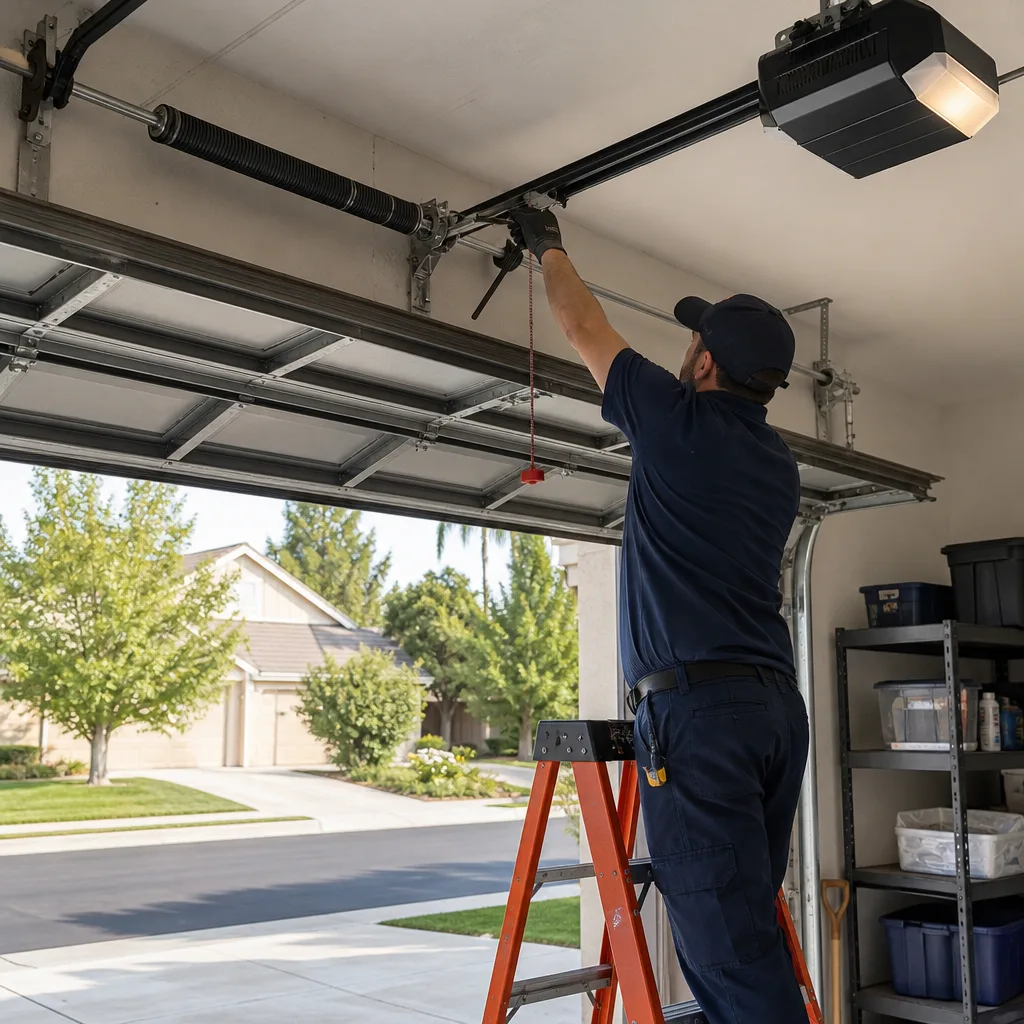
One more layer: spring and cable work on a garage door carries real injury risk. A garage door spring under tension stores enough energy to break bones or worse if it releases unexpectedly. We’ve seen the results of a homeowner attempting a torsion spring swap with improvised tools, and it’s not worth the $100 saved. Springs, cables, and anything involving the opener’s electrical connection are the items we always recommend leaving to a trained professional. Garage doors are all we do, and we still approach every spring with the respect it deserves.
What Permits and Inspections Cost in Elk Grove and Sacramento County
Permit fees for garage door work vary by jurisdiction, but they’re modest compared with the cost of the door itself. In the City of Elk Grove, a like-for-like replacement with no opening change typically carries no permit fee because no permit is required. When a permit is required, the Elk Grove fee schedule lists a flat rate for residential door and window replacements, which historically runs $150-$400 depending on the scope. Sacramento County’s valuation-based fee for the same work lands in a similar range but is calculated differently, usually landing between $200-$500 for a single-door project with no structural work.
The costs to expect:
- Plan check fee: $100-$300 in Sacramento County for projects requiring drawing review, which is typically only when the opening changes or the garage is being converted. Elk Grove generally includes plan check with the permit for simple door changes.
- Inspection fee: $100-$250 per inspection visit, depending on jurisdiction. Most garage door projects need one final inspection. If something fails, the second visit costs the same fee again.
- Title 24 energy compliance documentation: $0 if the project is exempt, $50-$150 if a consultant or contractor prepares the forms for a conditioned garage.
- HOA architectural review fee: $25-$100 in most Elk Grove communities, sometimes waived for like-for-like replacements in the same color and style.
No matter the jurisdiction, the price is quoted and agreed before any work starts. That’s the standard we hold ourselves to at Artisan Garage Door Repair, and it’s a question you should ask of any contractor before signing. A written quote with a defined scope is the simplest insurance against a surprise invoice at the end.
Common Mistakes to Avoid
- Confusing HOA approval with a city permit. They serve different purposes and answer to different authorities. Getting your HOA’s sign-off on a Wayne Dalton carriage-house door does not mean City of Elk Grove or Sacramento County code compliance, and a city permit does not satisfy your HOA.
- Assuming a “new garage door” means a permit is automatic. A like-for-like replacement, which is most residential garage door work, is permit-exempt in both Elk Grove and unincorporated Sacramento County. Checking first saves you a wasted trip to the counter and a fee you didn’t need to pay.
- Skipping the weather sealing because “it’s just a garage.” Climate Zone 12’s hot-dry climate makes the seal a real energy loss point, and Sacramento-area inspectors look for it specifically because the daylight gaps are easy to spot.
- Replacing a door before checking the HOA’s approved list. In communities with brand or panel restrictions, installing an Amarr door the HOA hasn’t approved means pulling it and replacing it at your own cost. That’s a $2,000-$5,000 self-inflicted wound.
- Pulling a permit on a conversion and not finishing the energy compliance. If the garage becomes living space, the door and the walls need Title 24 documentation. An unfinished compliance file is exactly the kind of thing a buyer’s inspector flags at escrow, and it turns a $1,400 door into a $3,200 problem.
- Doing your own torsion spring work to save money. A spring under tension is a loaded weapon. The emergency room bill costs more than the service call, and that’s before counting the damage a dropped door does to the tracks, panels, and opener.
See the difference
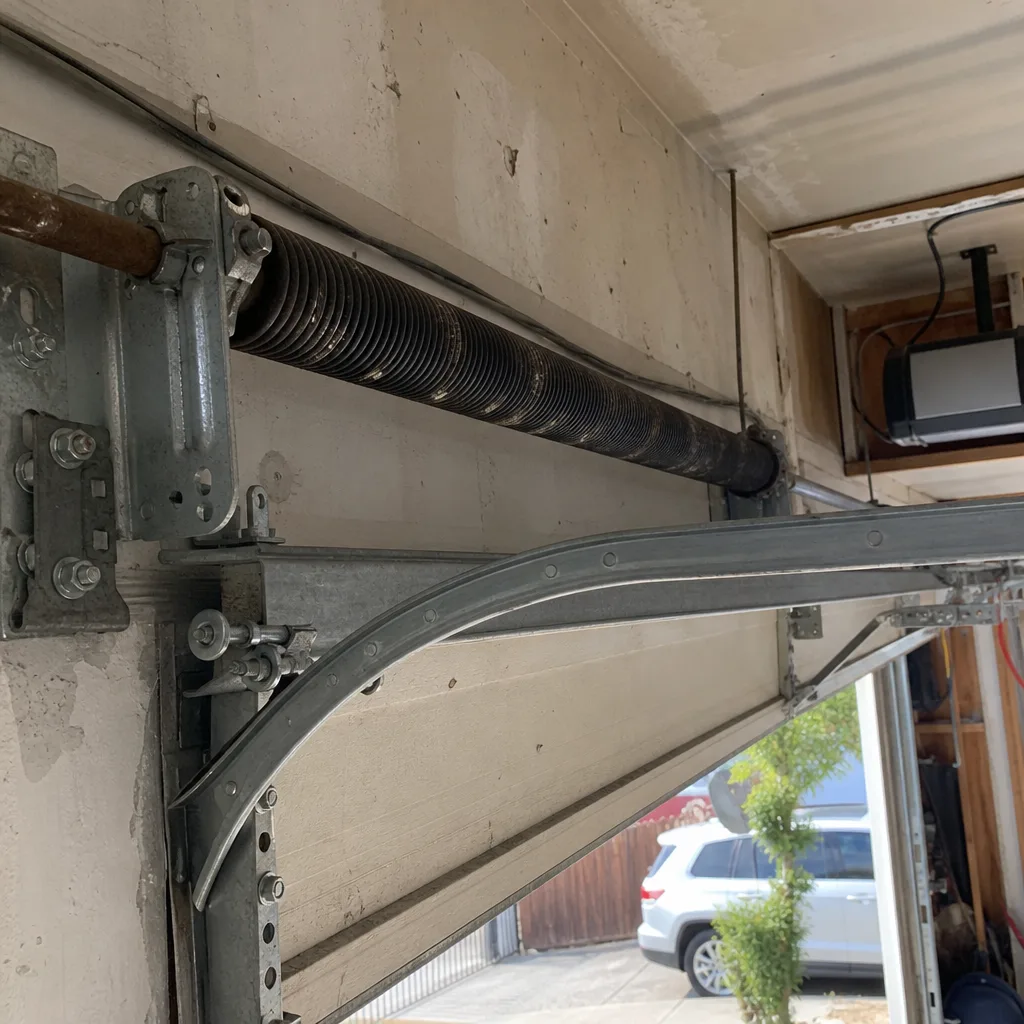 Before
 After
 Before
 After
 Before
 After
When to Call a Professional
If your project involves any change to the rough opening, a garage conversion, or a conditioned garage where Title 24 documentation is required, that’s the time to bring in a company that handles permits, inspections, and HOA coordination as a regular part of the job. Likewise, if you’re selling your home and the buyer’s inspector has flagged the garage door or opener, or if a previous owner did work without a permit and you need to regularize it before closing. And for anything involving springs, cables, or high-tension hardware, do not do it yourself. The risk is not theoretical. Garage door opener repair in Elk Grove from Artisan Garage Door Repair includes a full safety check of the door, tracks, springs, and reverse system as standard practice.
Artisan Garage Door Repair offers free estimates in Elk Grove. Call (855) 631-8980 and we’ll come out, assess the door, tell you honestly whether a permit is required for your project, and quote the work in writing before anything begins.
Frequently Asked Questions
No, in most cases replacing an existing garage door with a new door of the same size and configuration is a permit-exempt like-for-like replacement in the City of Elk Grove. A permit is required only if you change the opening dimensions, add a new door where none existed, or convert the garage to habitable space. Call the City of Elk Grove Building Department with your address to confirm your specific situation, or call (855) 631-8980 and we’ll confirm it for you.
CRC R302.5 is the California Residential Code section requiring that openings between an attached garage and living space meet fire protection standards, including a solid or 20-minute rated separating door and sealed penetrations. For the garage door itself, it matters when the door is part of a garage conversion or new construction, in which case the assembly must maintain the fire separation. Inspectors check penetrations through the garage ceiling and walls, and unsealed penetration from an opener install is a common citation.
Yes, replacing or installing a garage door opener on an existing door is a repair-level activity and does not require a building permit in Sacramento County or the City of Elk Grove. The work must still meet UL 325 automatic reverse requirements, and if the opener involves new electrical wiring, that may require an electrical permit depending on the scope. Most opener replacements reuse the existing dedicated circuit, which keeps the job permit-exempt.
When a permit is required, garage door-related permit fees in the City of Elk Grove typically run $150-$400 for a single-door project without structural changes. Sacramento County uses a valuation-based formula that typically lands between $200-$500 for the same project. For like-for-like replacements, which are exempt, the cost is $0. Call (855) 631-8980 and we’ll give you a written estimate for the door and any applicable permit fees.
Yes, if your Elk Grove home sits in an HOA-governed community, architectural review approval is a separate process from any city permit. HOAs can restrict panel style, color, and even brand, and installing a door without approval means removing and replacing it at your own expense. Pull the HOA application before ordering the door, and confirm with your installer whether the model you’ve chosen matches the HOA’s approved list.
If the door was a like-for-like replacement, no permit was ever required, and the issue is usually resolved by providing the installation receipt and confirming the door is a standard swap. If the door involved an opening change or garage conversion that should have been permitted and wasn’t, the buyer’s inspector or lender may flag it, forcing you to retroactively pull a permit, bring the work into compliance, and cover the penalties. Retrofitting a non-permitted garage conversion is the most expensive version of this problem, routinely adding several thousand dollars at escrow.
The Bottom Line
Most garage door replacements in Elk Grove and unincorporated Sacramento County never need a permit. The work is a same-size swap, the door meets Title 24 sealing requirements, and life moves on. The expensive problems happen when work that should have been permitted isn’t, when a garage conversion leaves the door and energy compliance half-finished, or when an HOA’s architectural review gets skipped and the door has to come back out. The code itself is not mysterious. The trap is in the details most people don’t know to ask about. Ask. Get the answer in writing. And if you have any doubt about whether your project crosses a permit line, call a specialist who handles garage door repair in Elk Grove and garage door installation in Elk Grove on both sides of the line. Artisan Garage Door Repair is at (855) 631-8980, and estimates are free.
Written by the team at Artisan Garage Door Repair, serving Elk Grove since 2014.