

Last updated October 30, 2026
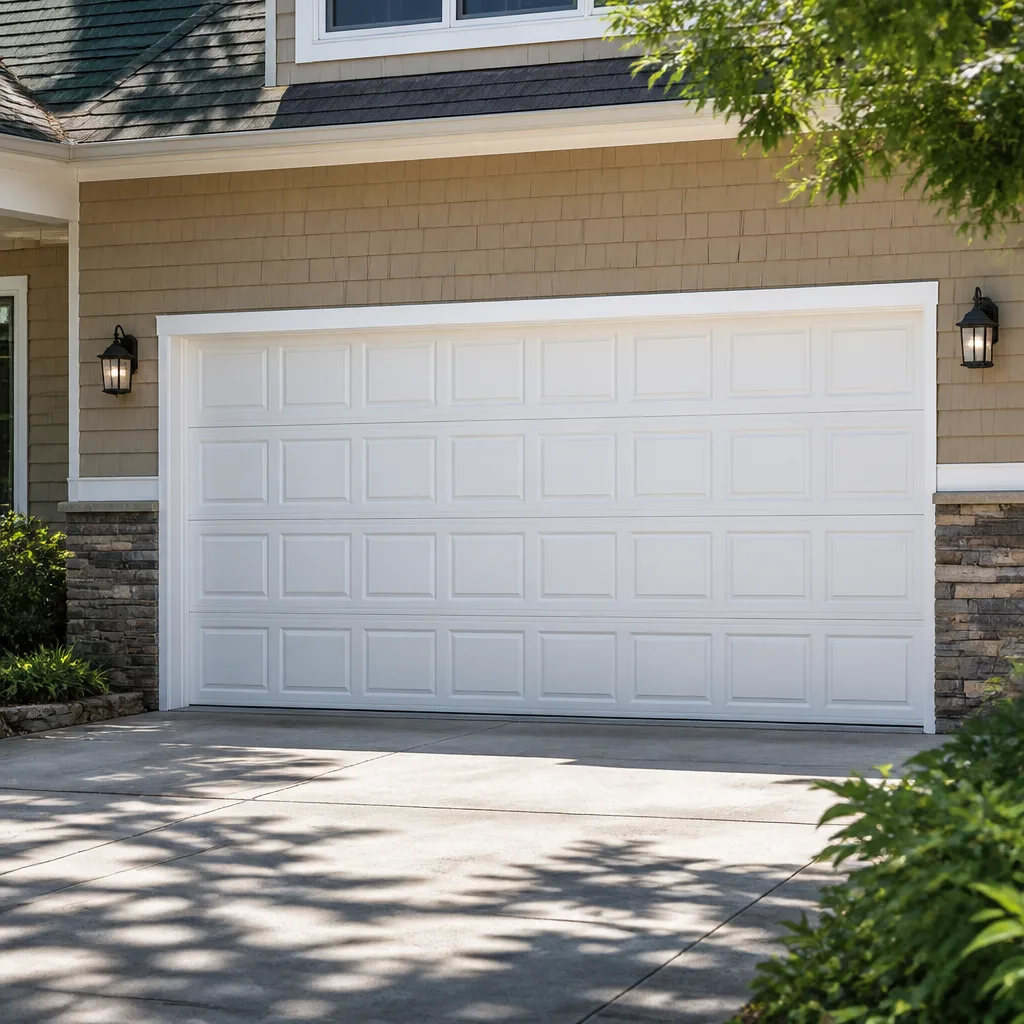 Raised-panel steel
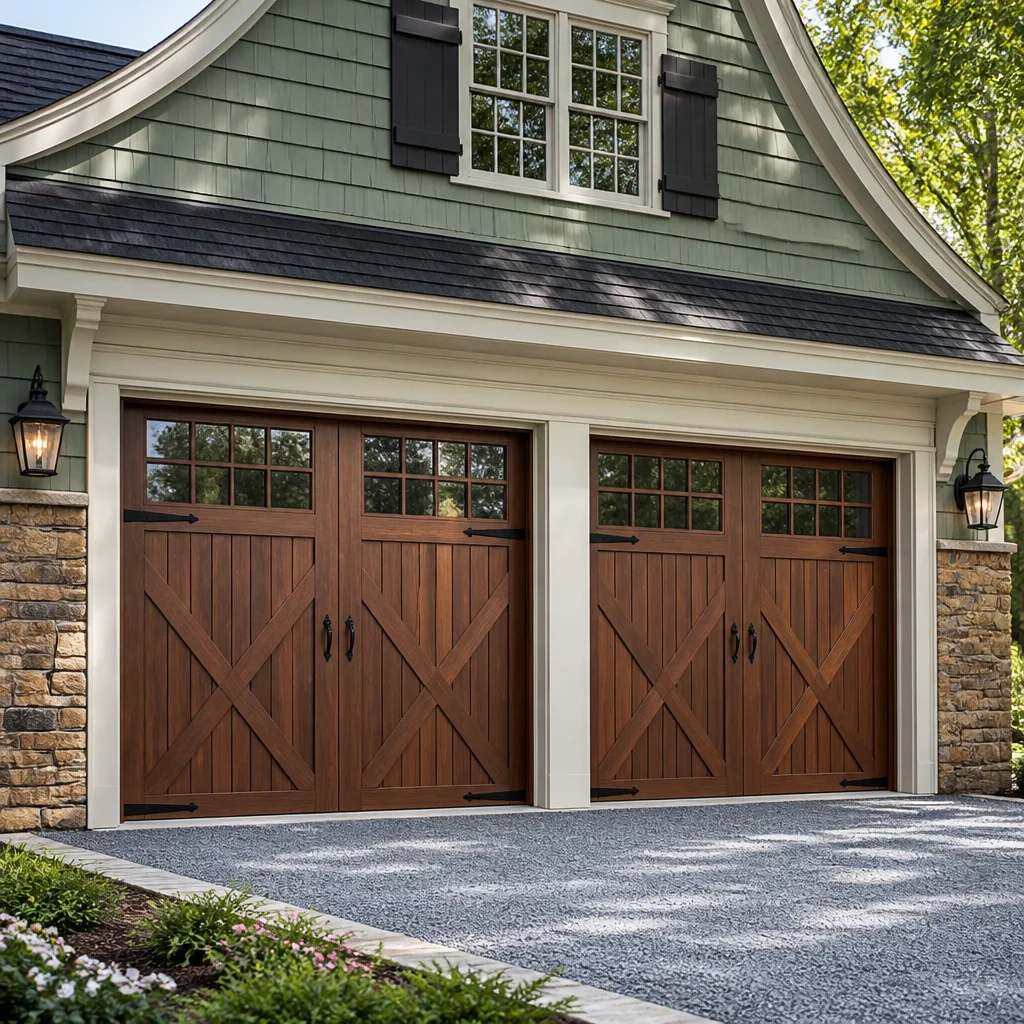 Carriage house
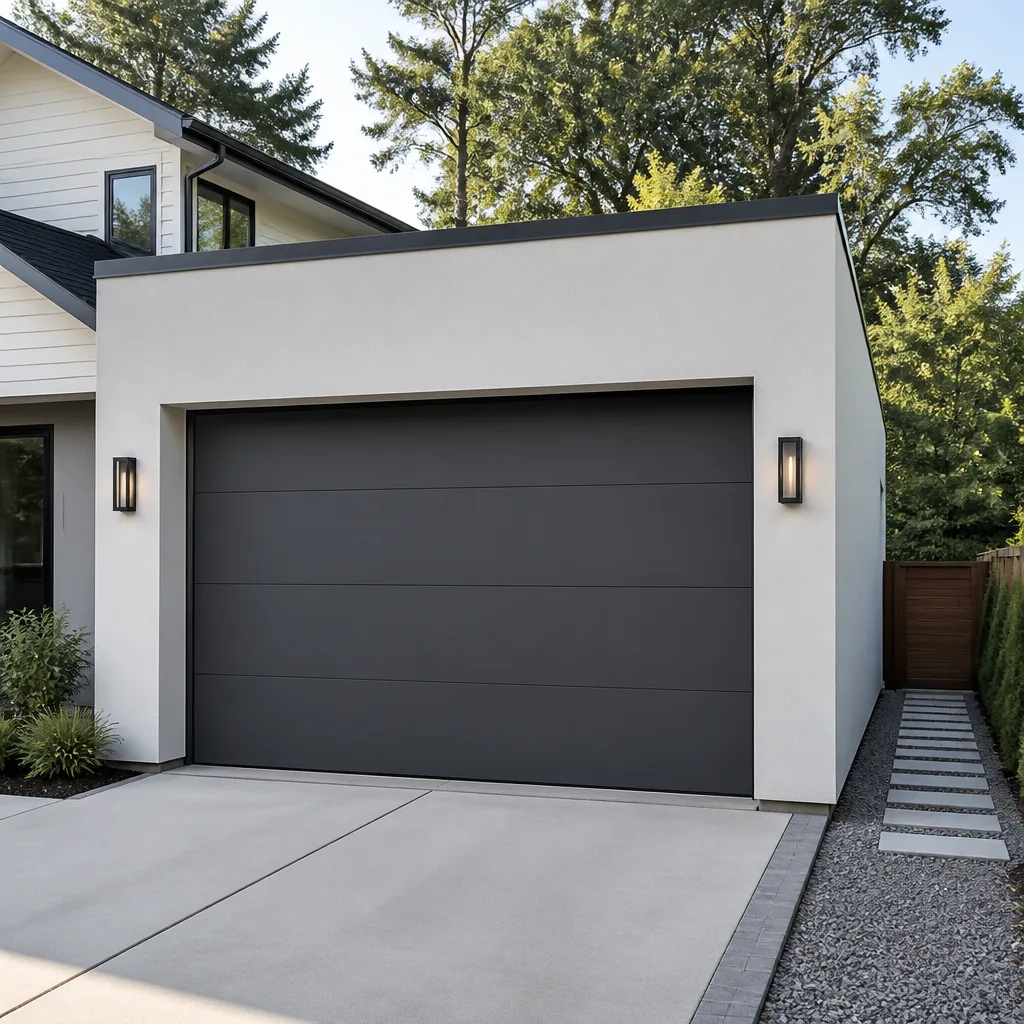 Modern flush
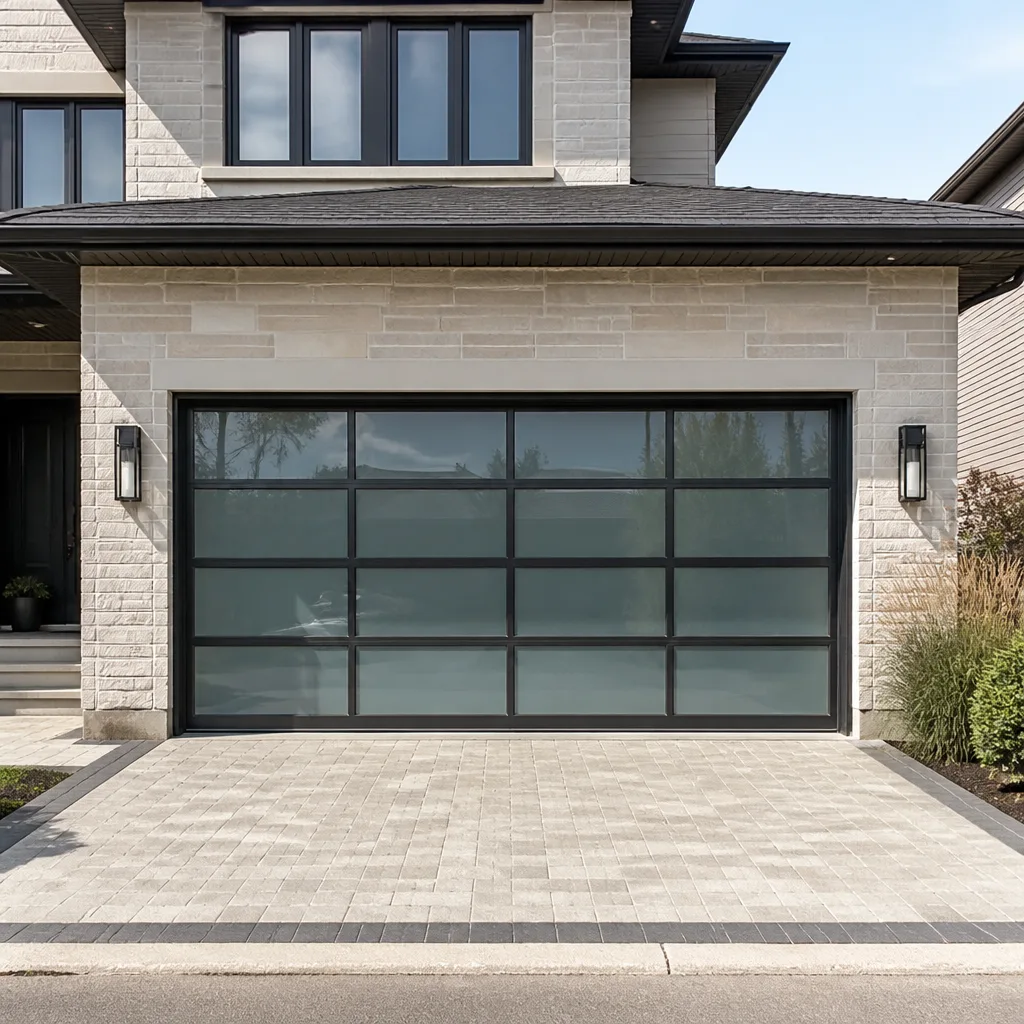 Full-view glass
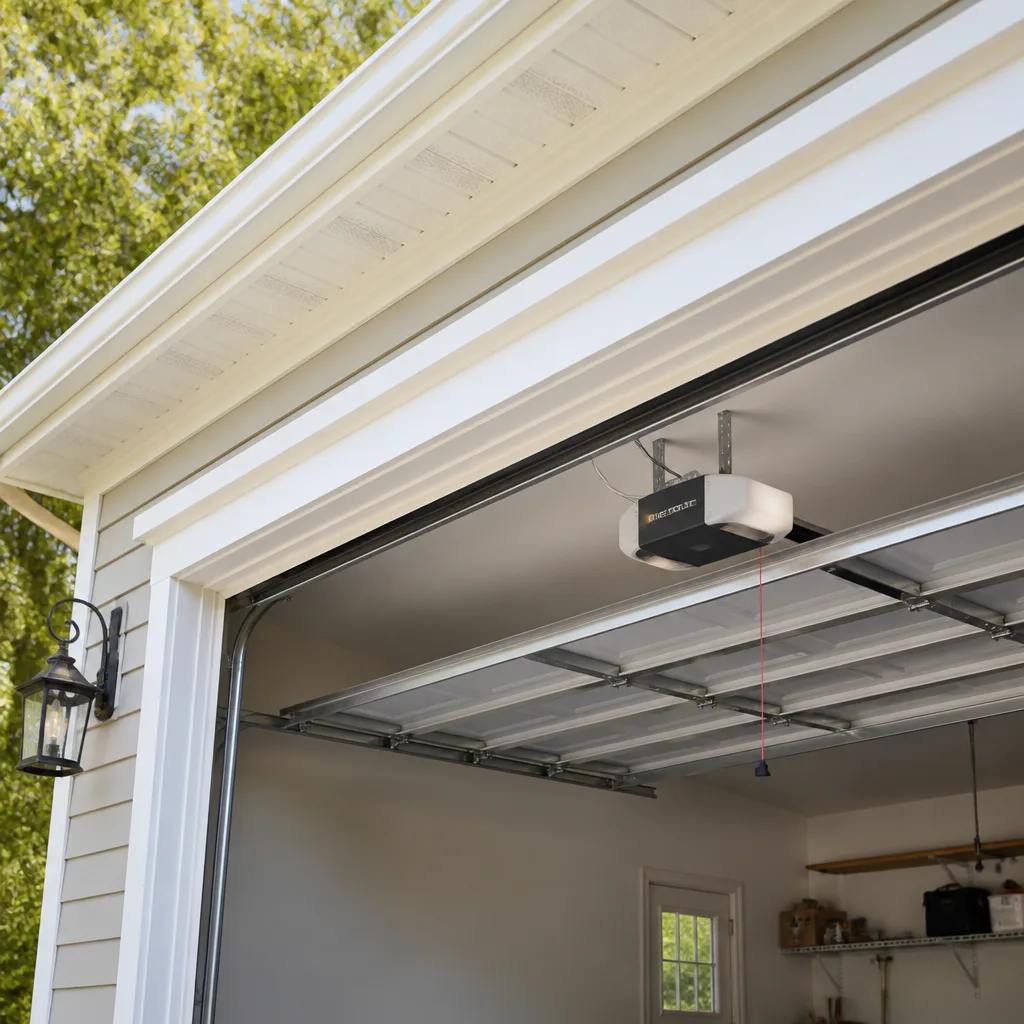 LiftMaster openers
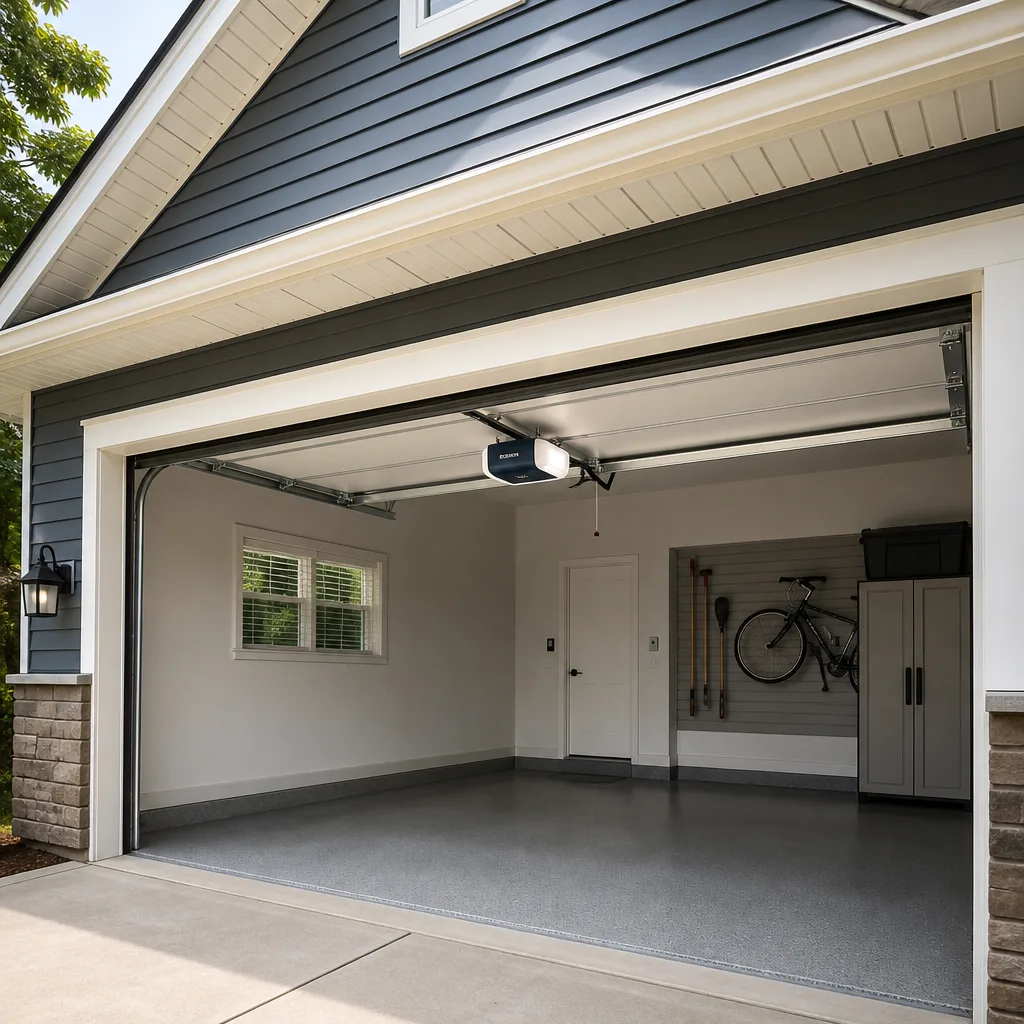 Chamberlain openers
Full 25-point door and opener safety check with every visit - springs, cables, rollers, tracks, and your LiftMaster or Chamberlain opener included
You get a price before we start. It does not change when the truck arrives.
Get your free estimateDIY vs Professional Garage Door: The Elk Grove Homeowner’s Decision Guide
Every year, roughly 1,600 Americans end up in emergency rooms from garage door injuries, and the statistics consistently point to one component: the torsion spring. That spring, wound tight above your closed door, stores enough kinetic energy to send a metal winding bar through drywall, bone, or worse. It’s not a liability disclaimer. It’s physics. This guide draws a clear line between what an Elk Grove homeowner can safely handle with a socket set and a Saturday, and what belongs in the hands of someone who has wound a hundred springs. We’ll give you the real cost of DIY when it goes sideways, what California law says about who can legally touch your door, and why some local builders made decisions in the 1990s that complicate your fix today.
Quick Answer
For garage door work in Elk Grove, the rule is simple: tasks that involve parts under tension, cables, springs, or track realignment call for a licensed professional, while cosmetic and low-risk maintenance like weatherstripping, sensor alignment, keypad programming, and minor dent repair are genuinely safe DIY projects. The financial line sits around $150 to $200 for professional parts and labor on most routine fixes, which often costs less than buying the wrong part, the right tool, and a second visit after the first attempt fails. If the part stores energy when the door is closed, don’t touch it; if it’s a wear item you can see and reach without a ladder near the tension system, the job is likely yours.
Styles & brands we work with
Table of Contents
- The Physics Problem: Why Springs Are Different
- The Safe DIY List: Six Tasks a Homeowner Can Own
- The Never DIY List: Four Tasks That Need a Licensed Pro
- What California Law Says About Who Touches Your Door
- Elk Grove Tract Homes and the Header Bracket Complication
- The Real Cost of DIY vs Professional Service
- Brand Fluency: Why It Matters When You DIY a Mix-and-Match Door
- Common Mistakes to Avoid
- When to Call a Professional
- Frequently Asked Questions
- Safe DIY: Bottom seal replacement, weatherstripping, keypad programming, sensor alignment, minor dent repair, and track lubrication.
- Not DIY: Torsion spring replacement, cable winding, track realignment under tension, and opener rail assembly.
- Legal reality: In California, paying someone unlicensed to repair your garage door for more than $500 in labor and materials violates contractor law and leaves you unprotected if something goes wrong.
- Local quirk: Some Elk Grove tract homes built in the 1990s and early 2000s use non-standard header brackets that don’t match big-box retrofit kits.
- The real cost: A $60 DIY spring job can become a $500-plus professional repair after a failed attempt, plus the original $60 is spent and often not returnable.
The Physics Problem: Why Springs Are Different
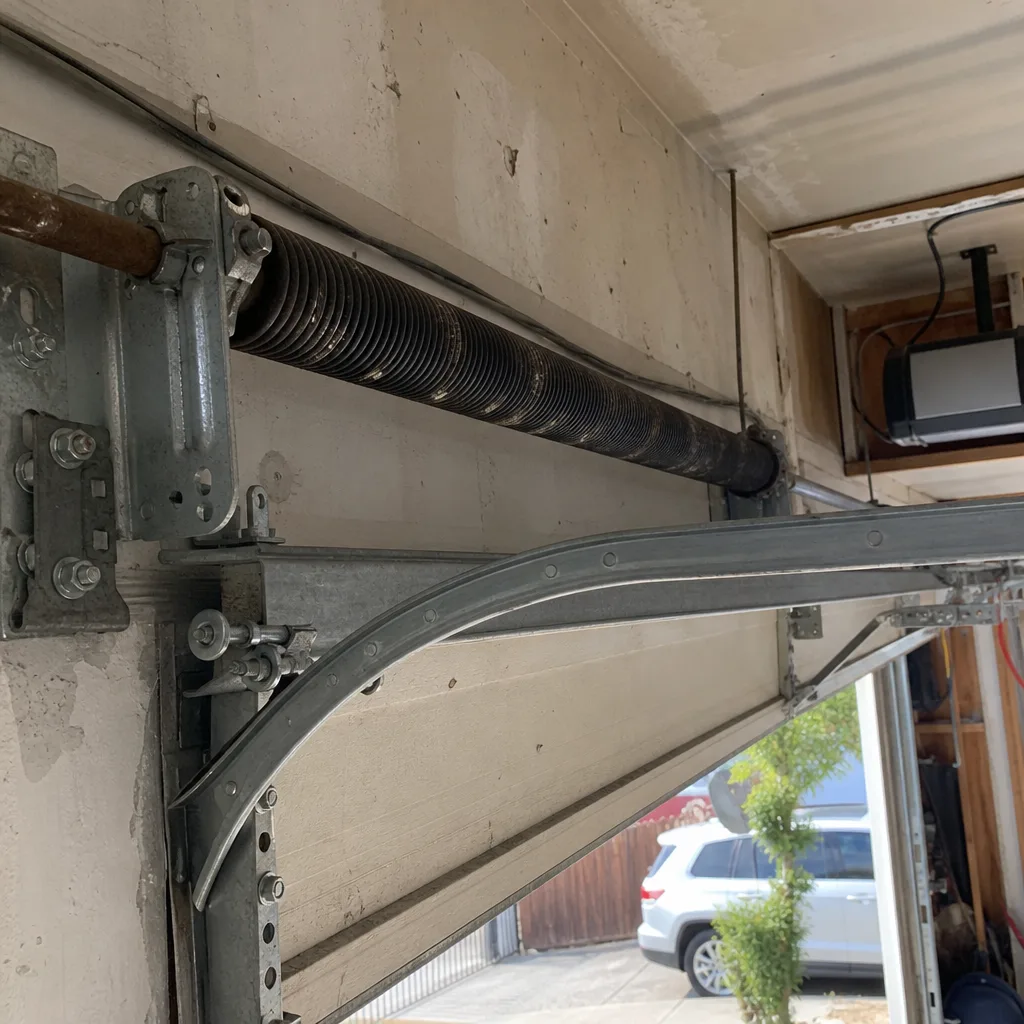
A garage door with torsion springs is a controlled slingshot. The springs counterbalance the weight of a door that can run between 100 and 400 pounds. When the door is closed, the springs are fully wound, holding perhaps ten to twelve turns of stored energy. That energy is what lifts the door when the opener pushes. If a spring breaks while you are working near it, the release is violent and immediate. A winding bar becomes a projectile. A hand in the wrong place becomes a case study.
We’ve been called to homes in Elk Grove where a homeowner watched a few YouTube videos and tried a torsion spring replacement with improvised tools. The most common injury isn’t fatal, but it’s life-altering: broken fingers, a fractured forearm, or a deep laceration to the face when a bar slips. The second most common outcome is a door that works for three weeks and then fails again because the spring wasn’t wound to the correct number of quarter-turns for that specific door weight. Torsion springs are sized by wire gauge, inner diameter, length, and wind direction. Get any one of those four wrong and you have a spring that either lifts the door once and snaps, or barely lifts it and burns out your opener motor in a season.
Here’s the key distinction: the dangerous part of garage door work is not the complexity. It’s the energy. You can learn the steps. You cannot learn your way out of a sudden, uncontrolled release. That’s why this guide doesn’t divide work into “easy” and “hard.” It divides work into “low energy” and “high energy.” If the part is not under load when the door is closed, it’s likely safe. If the part is under load, meaning it moves or holds weight when the door is stationary, it requires a winding bar, a cable clamp, or both, and that’s the line.
This approach applies to every door in every Elk Grove neighborhood, from the newer builds in Madeira and Laguna Ridge to the original 1970s and 1980s homes near Elk Grove Boulevard. The physics doesn’t care how nice your house is.
The Safe DIY List: Six Tasks a Homeowner Can Own
There is a genuinely satisfying set of garage door tasks that a competent homeowner in Elk Grove can take on without calling anyone. These jobs share three traits: they don’t involve parts under heavy tension, they require tools most homes already have or can buy for under $40, and a mistake doesn’t result in injury or a destroyed door. Here’s your definitive list.
- Bottom seal replacement. The rubber strip on the bottom of the door is a wear item. Sacramento Valley heat dries it out, and once it cracks, you’re inviting dust, pests, and your air-conditioned air to leak out. Replacement channels slide out and new seal slides in. No tension, no risk. Cost: $25 to $45 for the seal at a local home center.
- Weatherstripping around the frame. The vinyl trim that seals the sides and top of the opening also degrades in sun. This is a nail-and-replace job with the door closed. Cost: $15 to $30.
- Keypad and remote programming. LiftMaster, Chamberlain, and Genie all publish clear programming sequences, and most modern units have a learn button on the opener head. Hold, press, enter PIN. If you have a Genie installed by the original builder and a Chamberlain remote from a previous owner, this can take a few tries because the two systems don’t always want to talk, but it’s a no-risk project. Time: 10 to 30 minutes.
- Photo-eye sensor alignment. If the door reverses for no visible reason, the sensors at the bottom of each track are usually misaligned. Loosen a wingnut, re-level the sensor so both little lights are steady, and retighten. This is a no-cost fix and one of the most common repeat complaints we see where the homeowner never tried the obvious thing first.
- Minor dent repair. A shallow dent in a steel panel from a stray basketball or a tipped ladder can often be worked out with a rubber mallet, a block of scrap wood, and patient tapping from the back side of the panel. If the dent is on an active moving panel and the motor responds differently after the repair, you may have changed the door’s balance enough to matter.
- Track lubrication. This is the one task on the safe list that touches the track, so the caution is placement: never put your fingers between the roller and the track. Use a white lithium grease on the rollers and hinges, and a spray silicone on the torsion spring once a year. In Elk Grove’s hot, dry summers, the factory grease on older doors cooks off fast.
These six jobs are real maintenance, not busywork. Taken together, doing them once a year will extend the life of a new Clopay or Amarr door meaningfully. And none of them requires calling Artisan Garage Door Repair home for backup. But the moment the job list includes a spring, a cable under load, or a track that has come loose from its bracket, the conversation changes.
The Never DIY List: Four Tasks That Need a Licensed Pro
If a task is on this list, the reason is not gatekeeping. It’s that the failure mode is either injury, property damage, or a compounding repair bill. Here are the four tasks we never recommend a homeowner attempt, no matter how many online tutorials are available.
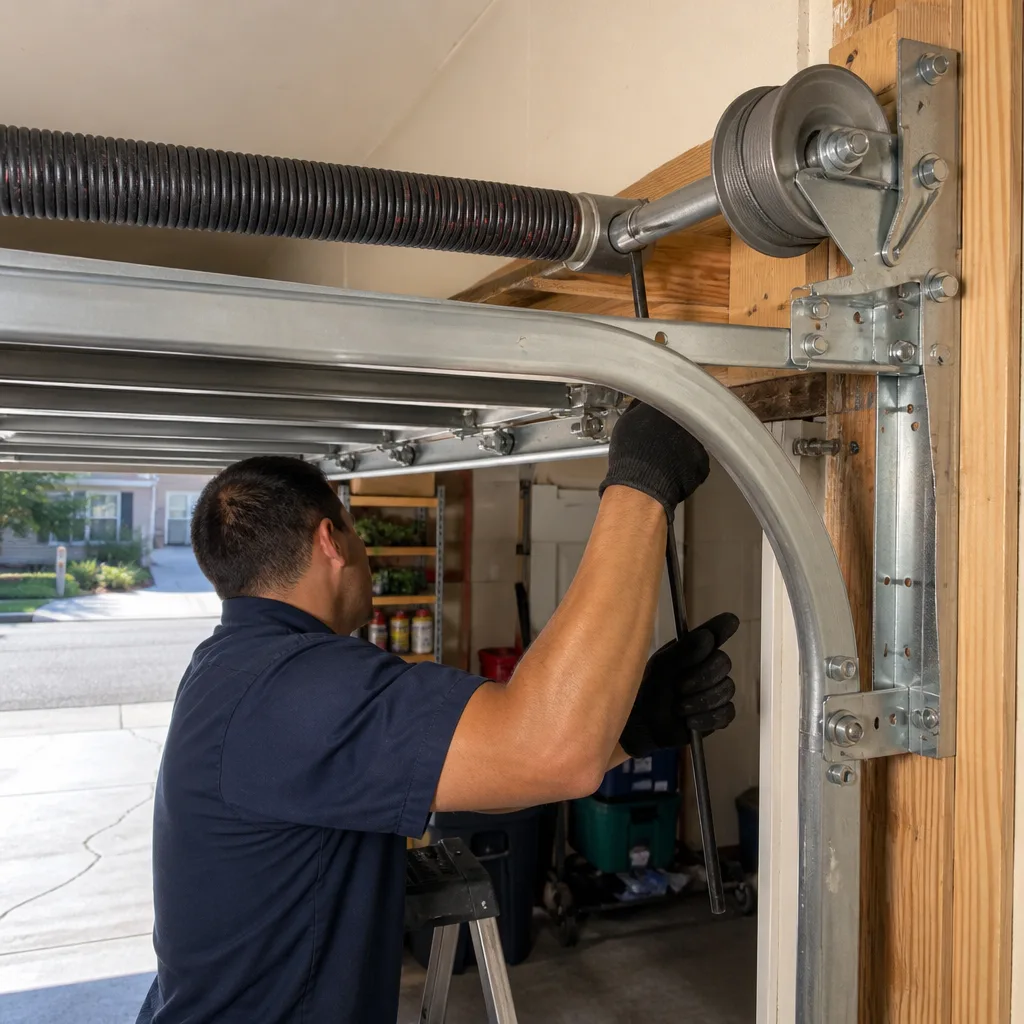
- Torsion spring replacement. Covered in detail above. The spring is wound to hold the weight of the door. Replacing it requires unwinding the old spring, removing the center bracket, sliding a new spring onto the shaft, and winding it to a precise number of quarter-turns. A half-turn too many and the door slams open. A half-turn too few and the opener burns out in months. This is the single most common injury task in the industry.
- Cable winding and replacement. The lift cables run from the bottom brackets, up the sides, and onto drums near the top. When a cable frays or pops, the door becomes a heavy, unbalanced panel that can slide hard to one side and derail. Replacing a cable requires releasing the tension on the spring first, which already moves this task into professional territory. Many Elk Grove homeowners mistake a broken cable for a broken spring, but the physics is the same: high energy, high risk.
- Track realignment or bracket repair. The vertical and horizontal tracks are bolted to the wall framing. When a bracket pulls loose, the door can bind or, worse, jump the track. Any repair that involves loosening, shimming, or replacing track brackets changes the geometry of the door path. A misaligned track will wear rollers, strain the opener, and eventually lead to a bent panel. This is not a hammer-it-back job.
- Opener rail assembly or motor replacement. While swapping a remote is safe, assembling a sectional opener rail, mounting the motor, and doing the final force and travel calibration involves working at height with the door’s balance in play. A mis-calibrated opener can crush whatever is under the door because the auto-reverse isn’t set correctly.
In our experience, the most expensive single call we make in Elk Grove is the one that comes after a failed DIY attempt on one of these four tasks. The original part, the cost of the attempt, the damage to an adjacent component, and then the professional repair often combine to cost 2.5 to 3 times what the pro repair would have cost the first time. More on that math below.
What California Law Says About Who Touches Your Door
California has specific contractor licensing law that Elk Grove homeowners should know before they consider hiring any unlicensed handyman for garage door work. Under Business and Professions Code section 7028, it’s illegal for an unlicensed person to perform construction or repair work valued at $500 or more in combined labor and materials. That threshold applies to the total job, not just the labor. A new door installation will essentially always exceed it. A spring repair might, depending on the part cost.
Why does this matter for a homeowner? Two reasons. First, if you hire an unlicensed person and the work is performed badly or causes damage, you have almost no legal recourse. The California Contractors State License Board cannot accept a complaint against a person it does not regulate. Second, your homeowner’s insurance will almost certainly deny a claim for damage caused by unlicensed work. If an unlicensed person drops a new door panel through a car windshield, the homeowner who hired them is the one holding the liability. That’s not a hypothetical. It’s a recurring claims pattern.
There’s also a safety angle. Licensed garage door contractors in California must carry workers’ compensation insurance if they have even one employee. If someone is hurt on your property while working on your door, and they don’t have coverage, the homeowner’s liability is direct.
For truly low-risk DIY work on the safe list, none of this applies because you’re doing your own labor. The moment you’re paying someone else to touch springs, cables, or any part of the door that carries tension, the contractor’s license should be current and the company should be willing to say so. If you need a full garage door repair in Elk Grove, working with a licensed specialist is not just a quality choice; it’s the legally sound one.
Elk Grove Tract Homes and the Header Bracket Complication
Here’s the part most DIY guides leave out entirely, and it’s the piece most relevant to anyone living in an Elk Grove subdivision built during the 1990s and early 2000s. During that era, production builders working in communities like Laguna West, Fallbrook, and much of the 95758 and 95757 zip codes were building at a pace that required consistent, repeatable garage door installations. To keep framing crews cheap and schedules moving, many homes were built with non-standard header layouts above the garage door. In practice, this means the steel header the door track bolts to is not always a clean, flat 2×6 spanning the full opening. Sometimes it’s doubled 2x4s. Sometimes there’s a plywood facing that changes the depth. Sometimes the original track was installed with shims to compensate for a header that wasn’t perfectly level, and it’s been working that way for 25 years.
What does that mean for a DIYer? When you order a universal track bracket kit or a retrofit part from a big-box store, it’s designed for a standard flat header. The kit assumes the metal angle bracket will sit flush and bolt straight. On an Elk Grove tract home with a shimmed or stepped header, those universal brackets don’t align. The track ends up angled, the door binds, or the bracket fails after a few hundred open-and-close cycles. Even experienced DIYers who have done the job before on a different house get tripped up because the wall doesn’t match what the instruction sheet shows.
That local framing quirk is exactly the kind of thing a technician who has worked in this specific market sees regularly. It’s not that the job is impossible for a homeowner. It’s that the job may require a fabricated bracket, a different mounting depth, or a custom angle that comes from seeing it before. And that’s the thing about garage door installation in Elk Grove: the door itself is often the simple part. The building’s original framing decisions are the variable.
The Real Cost of DIY vs Professional Service
Let’s run the actual numbers. The mistake most people make when comparing DIY to professional repair is comparing the cost of the part to the cost of the service call. That’s not the real comparison. The real comparison includes tools, the value of the first failed attempt, and the cost of any damage created along the way.
Take a broken torsion spring as the example, because it’s the most common high-tension failure in Elk Grove.
- DIY path: You order a spring online or buy one from a parts counter. $60 to $90 for the spring itself. You’ll need a pair of winding bars, which you can buy for $25 or try to improvise with wrong-diameter rods, which is a risk. If you don’t already own a socket set that goes up to the right size for the set screws, add $15. Total cash outlay: $100 to $130.
- If it goes well: You watch the right video, get the wind count correct, and the door works. Time invested: three to five hours. The spring now has no warranty from any installer, and if it fails early because it was the wrong size or wound incorrectly, you buy another one.
- If it goes sideways: You lose control of the winding bar, the door slams, and the top panel or a cable takes the hit. Or the spring is wound too tight and the door flies up on the first test, bending a track or breaking a roller. Now you’re paying for the original spring ($60 to $90), plus the replacement for whatever broke (a new cable is $25; a new top panel is $200 to $400), plus a professional to come and do the job you just paid to fail at.
The professional path for the same repair in the Sacramento area typically runs $180 to $340 depending on whether it’s a single spring or a pair, the spring size, and the neighborhood. That’s not a number we’ve pulled from a national average; it reflects what Elk Grove homeowners routinely pay for a licensed spring replacement in 2025. The pro quote includes the correct spring, calibrated to the door’s actual weight, plus a tension test and often a balance and safety check on the whole system.
So the honest comparison is not $100 versus $260. It’s $100 with the chance of a $200-to-$700 failure against a fixed $180-to-$340 with no additional cost if something else is wrong. In our experience, the most common turning point is the second attempt. The homeowner tries the DIY fix once and it works for a few weeks or months. Then the underlying issue returns, and that’s when the call comes in. The cost of the first attempt doesn’t come out of the second bill. If you’re already leaning toward calling a specialist for garage door opener repair in Elk Grove, the same math applies: a new board or gear kit is cheaper online, but the diagnosis and the calibration are what you’re really paying for on the professional side.
Brand Fluency: Why It Matters When You DIY a Mix-and-Match Door
One of the quiet realities of Elk Grove’s housing stock is that many garage doors are no longer what the builder installed. Original doors have been replaced with Clopay panels. Old openers have been swapped for a LiftMaster or a Chamberlain. The springs aren’t branded, and the cables and brackets may have been changed by a previous homeowner or a handyman. What you’re left with is a hybrid system: a Wayne Dalton track under a Clopay door, driven by a Genie opener, with a spring from a parts catalog.
That hybrid reality is where DIY part-shopping gets difficult. A homeowner goes to a parts store or an online catalog looking for “garage door spring” and has no way to know the difference between the right spring for a 250-pound door versus a 180-pound door. A homeowner looking at a Chamberlain opener error code and a Genie remote from a different era has to do a cross-brand diagnosis that a single-brand technician might get wrong too.
This is why we train our technicians to work on all eight of the most widely installed brands: LiftMaster, Chamberlain, Genie, Clopay, Amarr, Wayne Dalton, Craftsman, and Raynor. The point isn’t brand loyalty. It’s the opposite. We work on your brand, whatever it is. Because in Elk Grove, with 20-year-old production homes that have had two or three owners, the door in any given home is almost never a one-brand system. A repair that assumes everything matches the original spec is a repair that fails in a season. Diagnosed right the first time means looking at what’s actually installed, not what the label on the motor says.
Common Mistakes to Avoid
- Using screwdrivers as winding bars. A torsion spring needs two solid-steel bars of the correct diameter, seated fully into the winding cone before any force is applied. A screwdriver will bend, slip, or punch through a hand. This is the most common cause of DIY spring injuries in Elk Grove and everywhere else.
- Assuming the opener is the problem when the door strains. If the opener motor is making a grinding sound and the door moves slowly, the issue is often a broken or fatigued spring that’s no longer counterbalancing the weight. Replacing the opener won’t fix a spring. We see homeowners replace a $300 opener only to find the door still won’t lift because the spring was the real failure all along.
- Buying parts online based on brand name alone. “Clopay spring” or “LiftMaster opener” is not a part number. Springs are sized by gauge, diameter, length, and wind direction; openers by horsepower, rail type, and drive style. Ordering by brand alone means a high chance of a part that doesn’t fit.
- Failing to release the opener before working on the door. If the opener is engaged, it’s a powered device. Even if you’re just doing a safe task like sensor alignment, pull the release cord so the opener can’t activate while you’re near the track. A neighbor’s radio on the same frequency, a stuck wall button, or a smart-home glitch can trigger it.
- Replacing one spring when the door has two. Torsion springs are installed in pairs for doors that need two to balance. Both springs wear at roughly the same rate. If one breaks and you only replace the broken one, the older spring now carries more than its share and will fail soon, leaving you with the same problem and a second service call.
- Ignoring the balance test after any repair. A door should stay in place when lifted halfway and released by hand. If it creeps up or drops, the springs are wrong. Many DIY repairs never get this test, and the result is a door that slams or an opener motor that burns out prematurely.
- Giving up on a noisy door because it works. A garage door that works but sounds like a cement mixer is telling you something. In Elk Grove’s dry, hot climate, rollers dry out and hinges gall. Ignoring the noise means you’ll get a track wear problem or a broken roller at the worst possible time, usually in the middle of a heat wave.
When to Call a Professional
Call a pro if you hear a sound like a gunshot from the garage, because that’s a torsion spring letting go. Call a pro if the door sits at an angle, because that’s a cable failure. Call a pro if the door will not stay open, or if it opens halfway and stops, or if it slams down when you let go. Call a pro if any of the work on the never-DIY list above is on your to-do list, or check our Garage Door Emergency Preparedness Guide for Elk Grove Homes. From a stuck spring to a full new installation, one call covers it. Artisan Garage Door Repair offers free estimates in Elk Grove. Call (855) 631-8980 and we’ll give you an honest read on whether you’ve got a safe DIY job or something that needs a licensed hand. Garage doors are all we do.
Frequently Asked Questions
Spring repair in Elk Grove typically runs from $180 to $340 depending on whether you’re replacing one spring or a pair and the weight of the door. The price is quoted and agreed upon before any work starts, so the number you approve is the number you pay. For an exact quote on your door, call (855) 631-8980.
You can, but you should not. A torsion spring stores enough energy to cause severe injury when it releases, and proper installation requires matching the spring to the door’s exact weight and winding it to a precise number of quarter-turns. The mistake margin is high and the failure mode is abrupt.
Disconnecting the opener removes one hazard, the powered motor, but it does nothing about the other hazard, the spring under tension. If your task is on the safe list like weatherstripping or sensor alignment, disconnecting is good practice. If your task is on the never-DIY list, disconnecting the opener is not what makes it dangerous, so it doesn’t change the answer.
Artisan Garage Door Repair technicians are trained on eight major brands: LiftMaster, Chamberlain, Genie, Clopay, Amarr, Wayne Dalton, Craftsman, and Raynor. That means we work on the system already installed in your home, no brand switching required.
If you’re paying someone else to do work valued at $500 or more in combined labor and materials, California law requires that person to be a licensed contractor. For your own DIY work, no license applies. For any professional repair, a license protects you and your homeowner’s insurance position.
A spring replacement on a standard Elk Grove residential door takes about 45 to 90 minutes, including winding the new spring, running a balance test, and checking the full opening cycle. The appointment itself is often same-day, depending on current call volume. Call (855) 631-8980 to check availability.
The Bottom Line
The DIY-versus-professional question for Elk Grove garage doors isn’t a test of your handiness. It’s a question of where the energy is stored and what a mistake costs. You can absolutely own the low-risk maintenance list: seal replacement, weatherstripping, programming, sensors, dents, lubrication. You should not own the high-tension list: springs, cables, tracks, and opener calibration. California’s licensing rules are there to protect you from unlicensed labor, and Elk Grove’s older tract-home framing is there to remind you that not every house matches the instruction sheet. When the job crosses into tension territory, call a specialist who works on your brand, whatever it is. For more guides & resources, explore our blog. Estimates are free. The phone number is (855) 631-8980.
Written by the team at Artisan Garage Door Repair, serving Elk Grove since 2014.
See the difference
 Before
 After
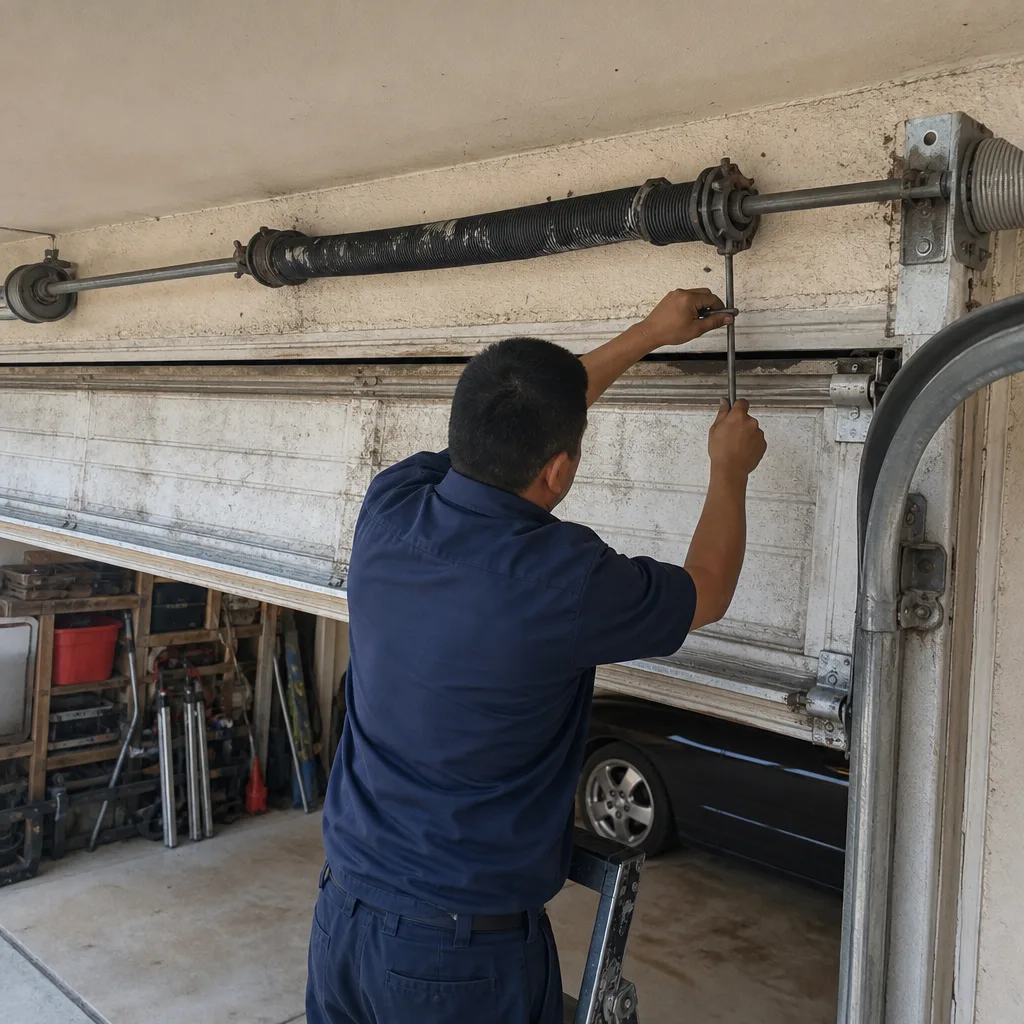 Before
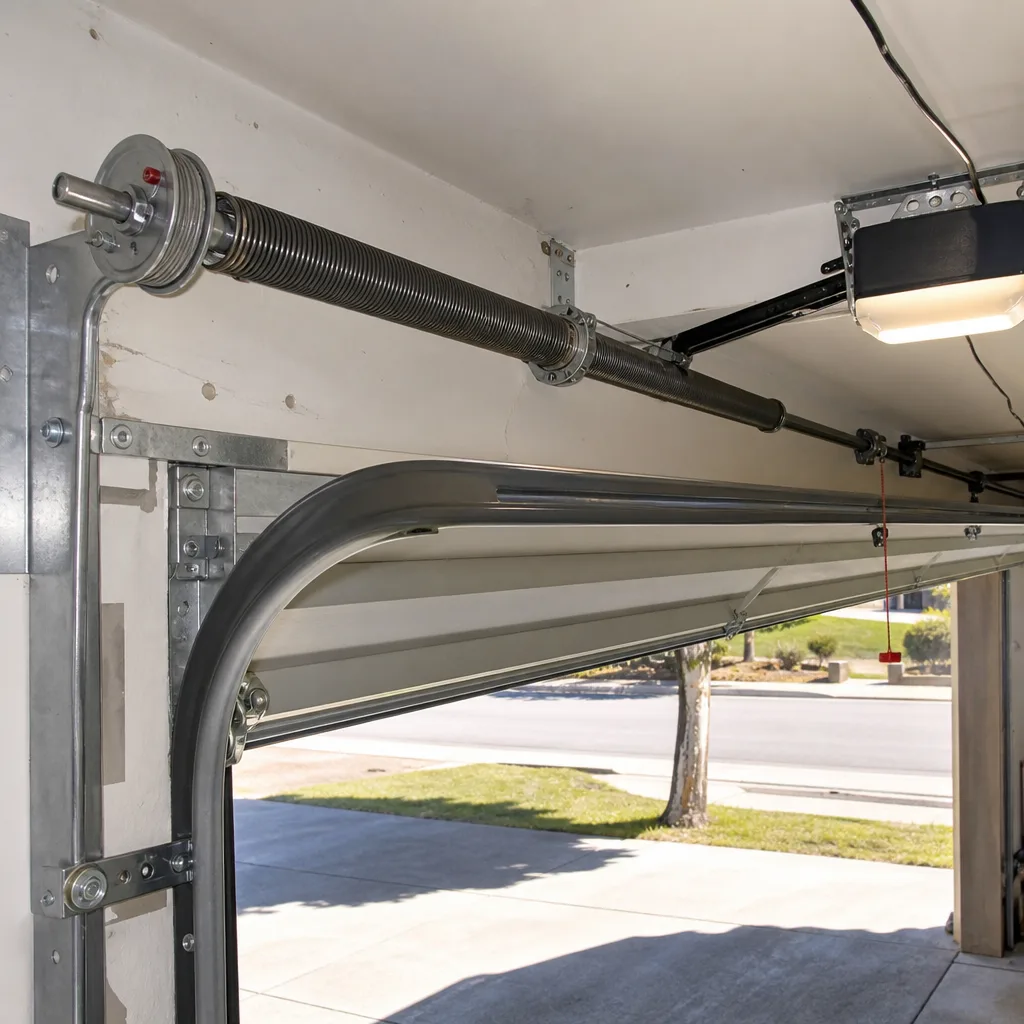 After
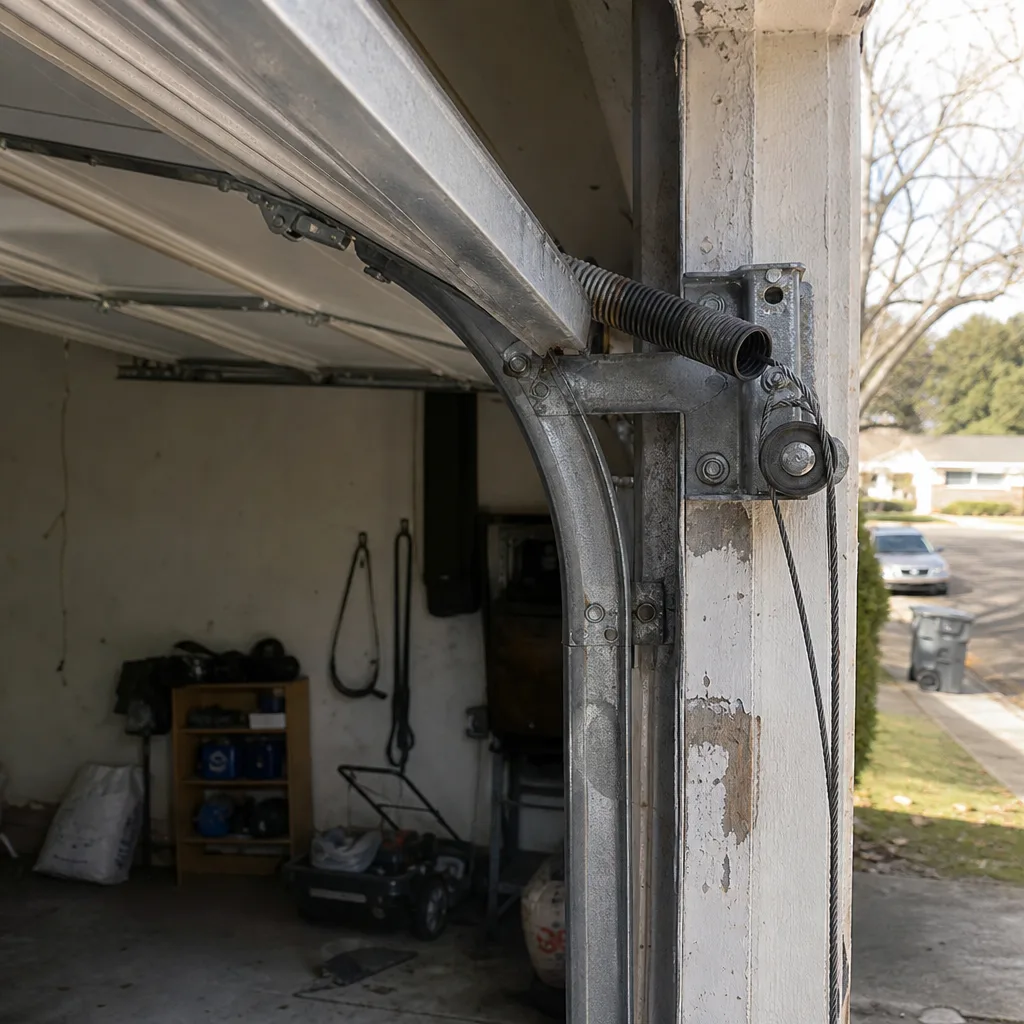 Before
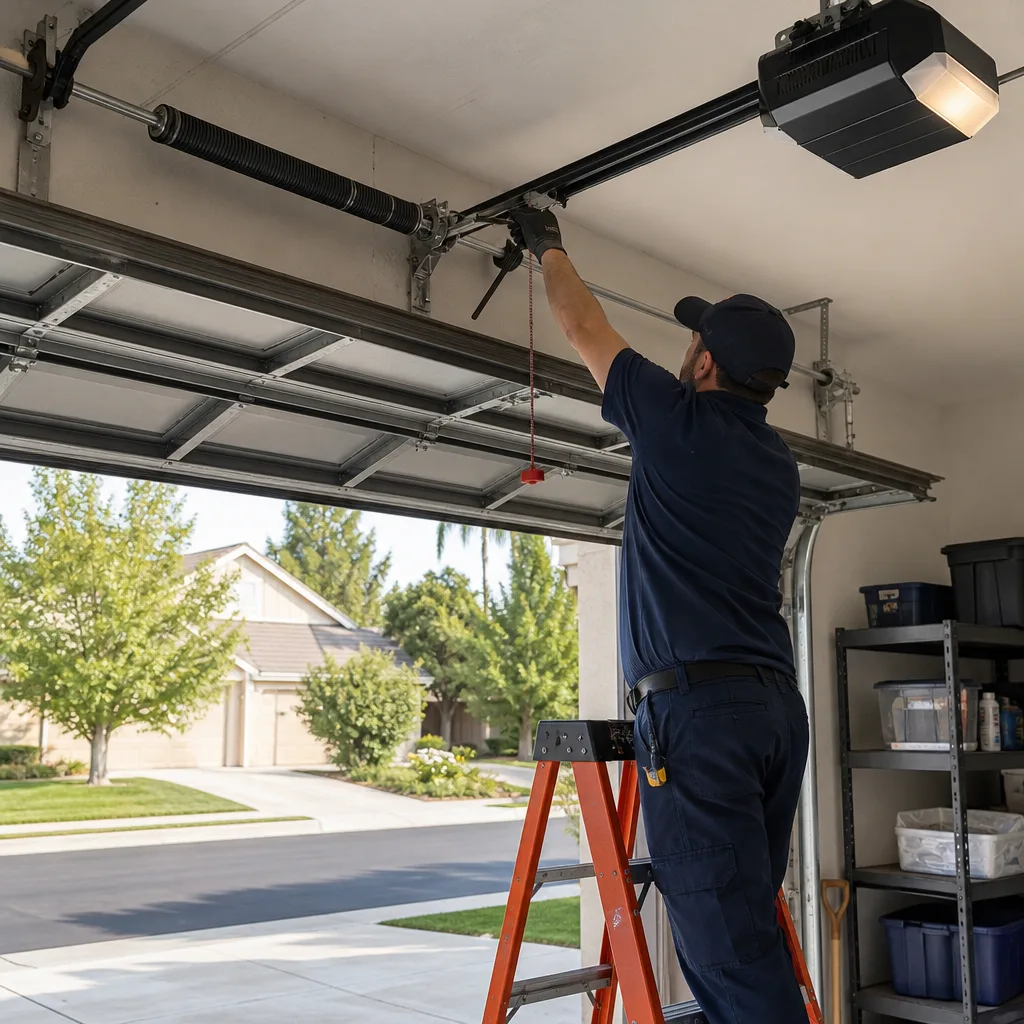 After