
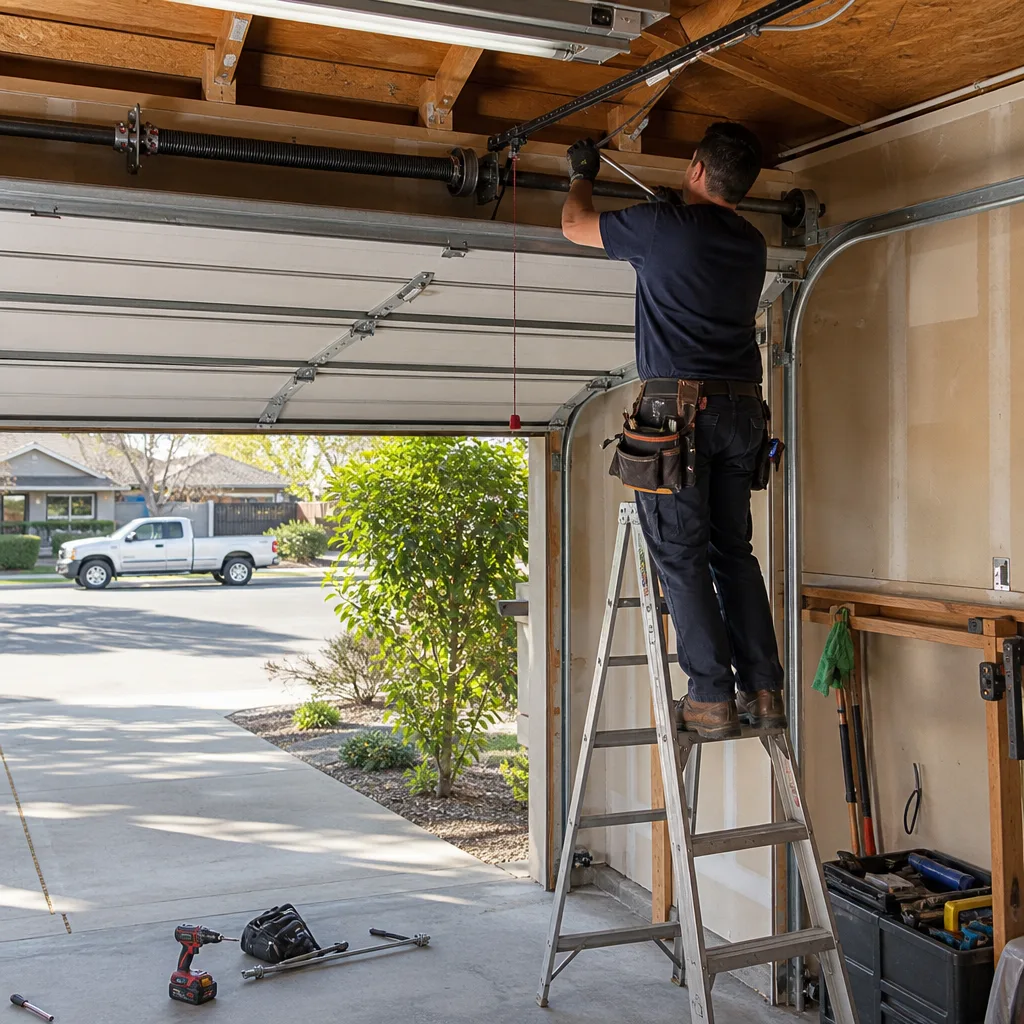
Last updated October 30, 2026
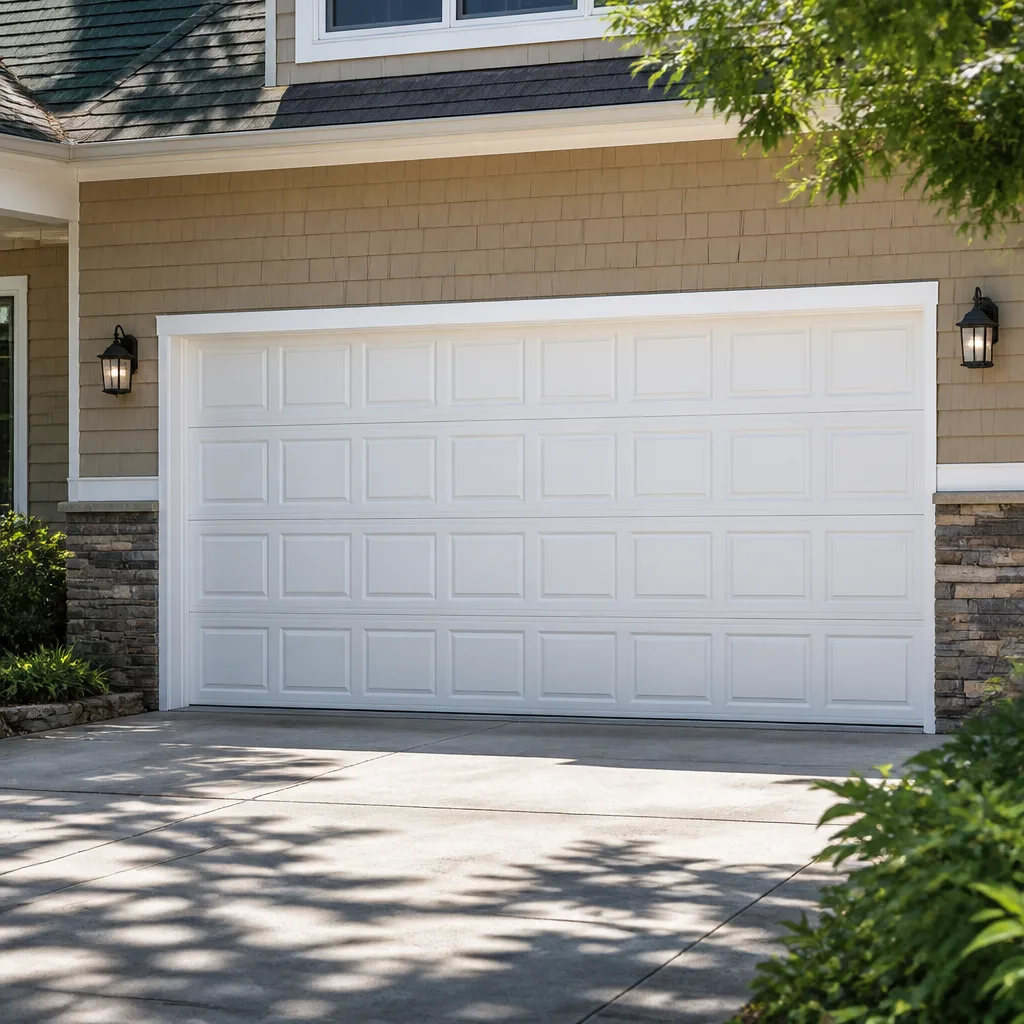 Raised-panel steel
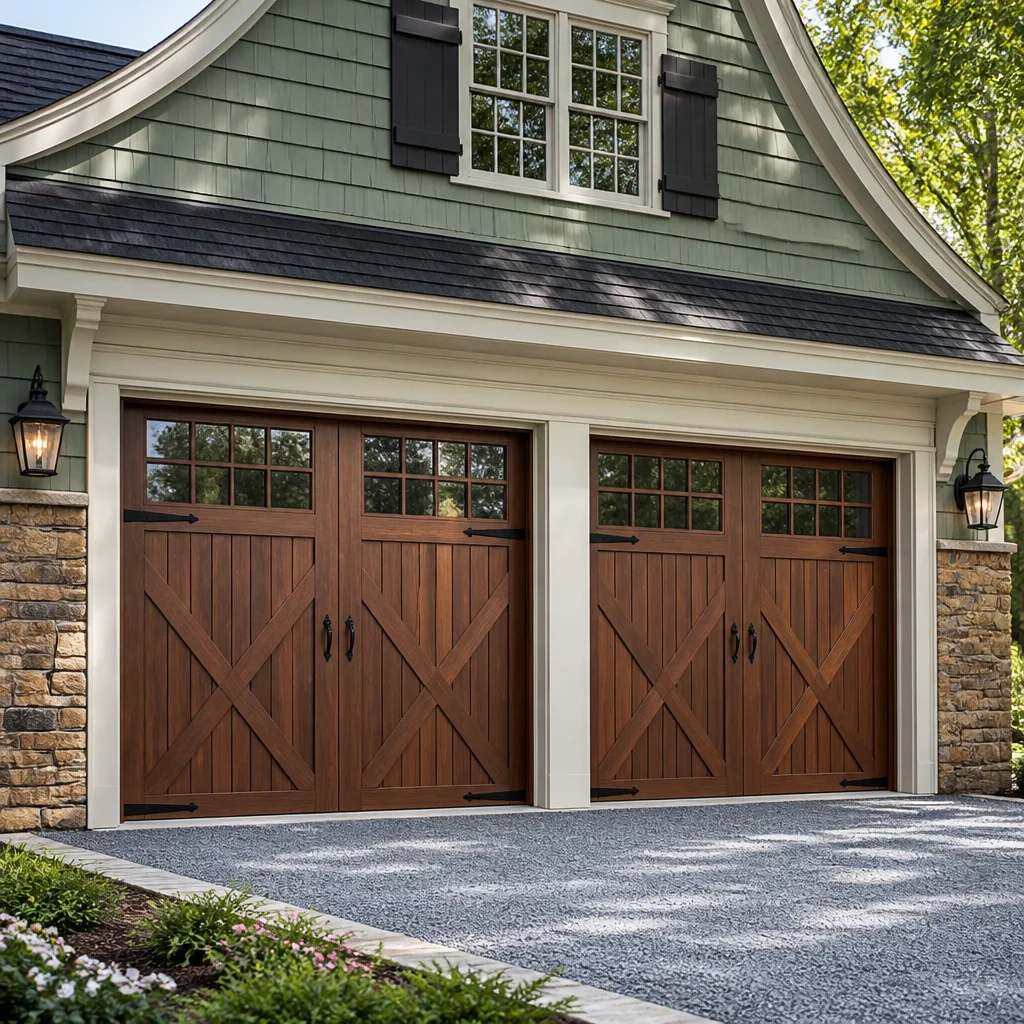 Carriage house
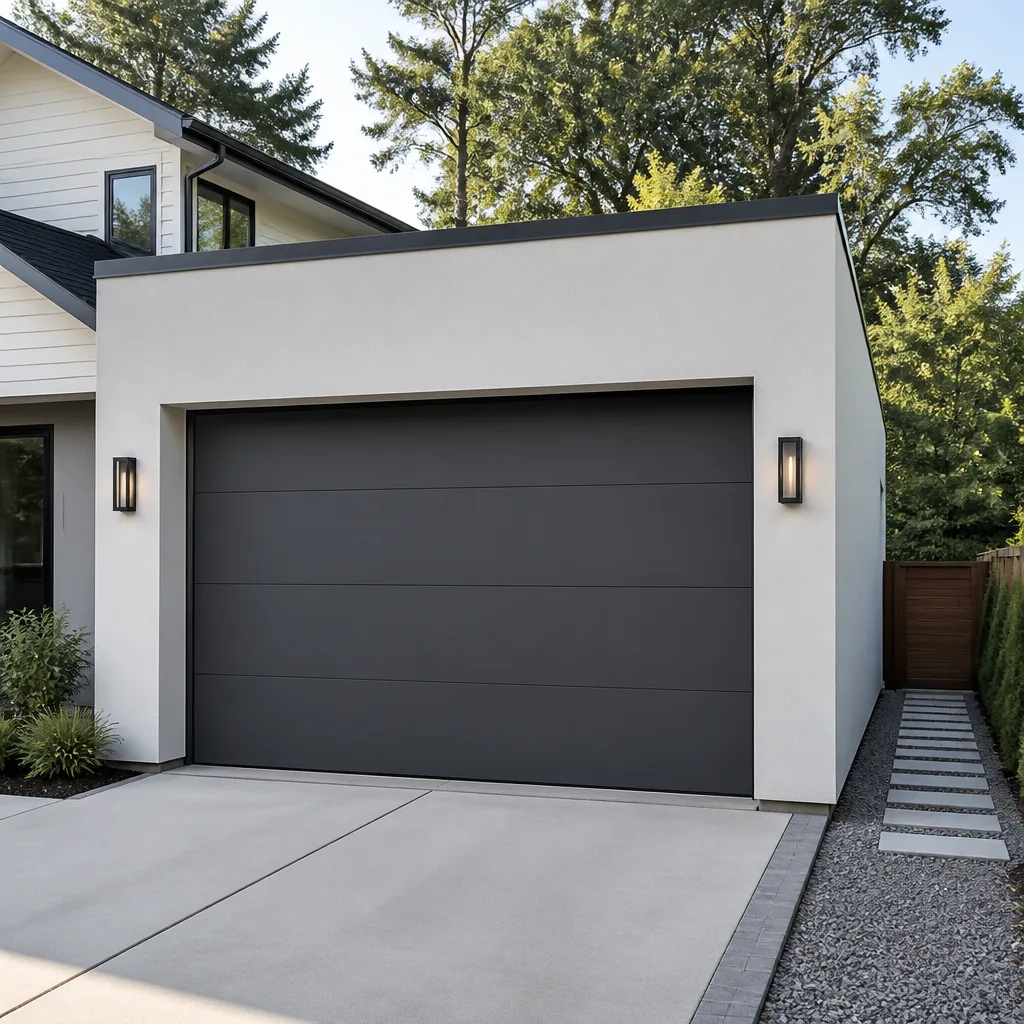 Modern flush
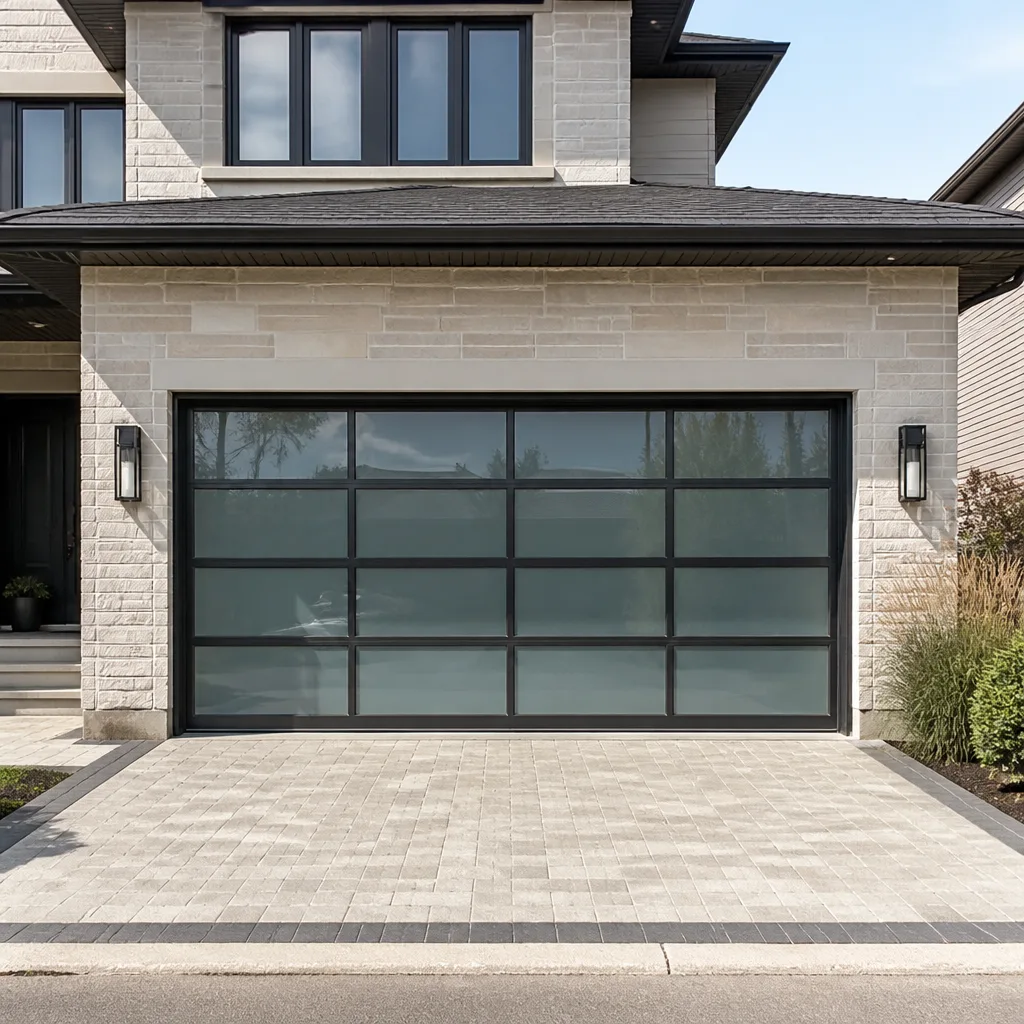 Full-view glass
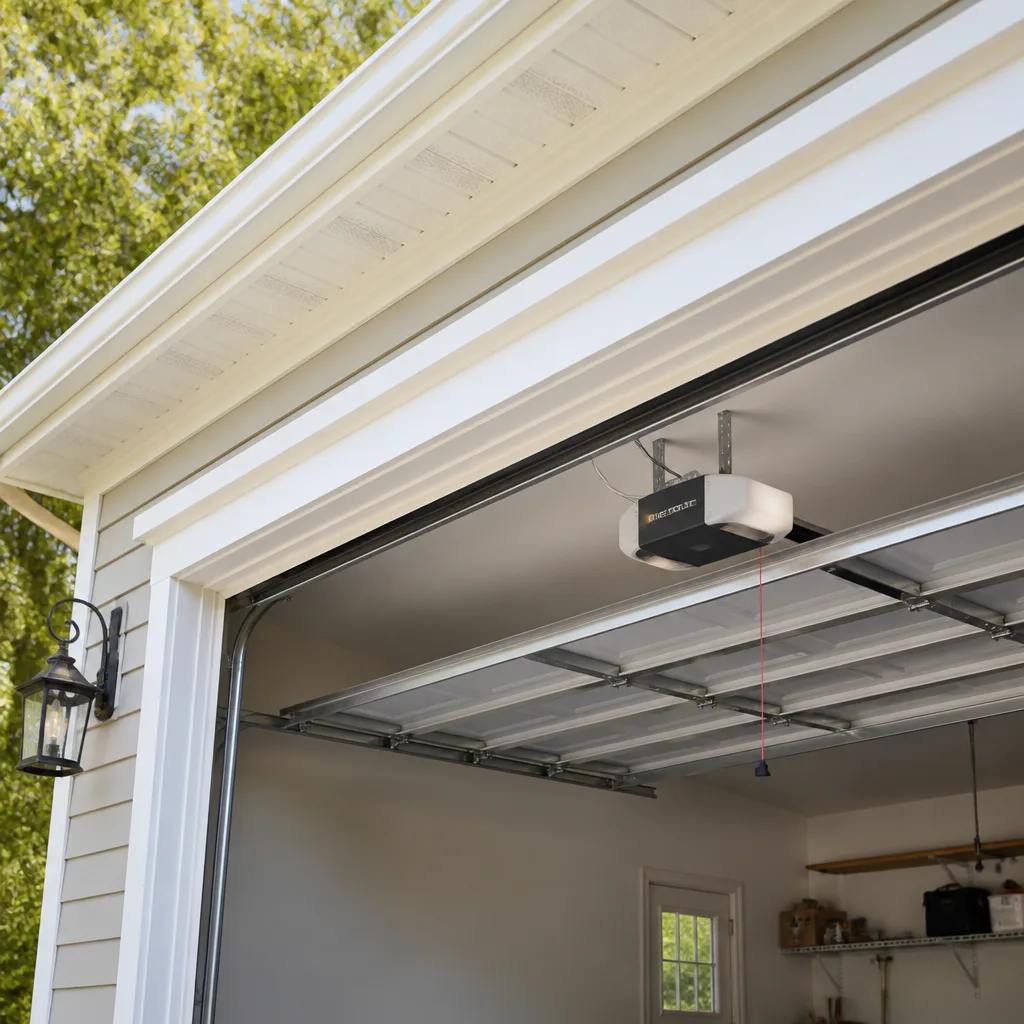 LiftMaster openers
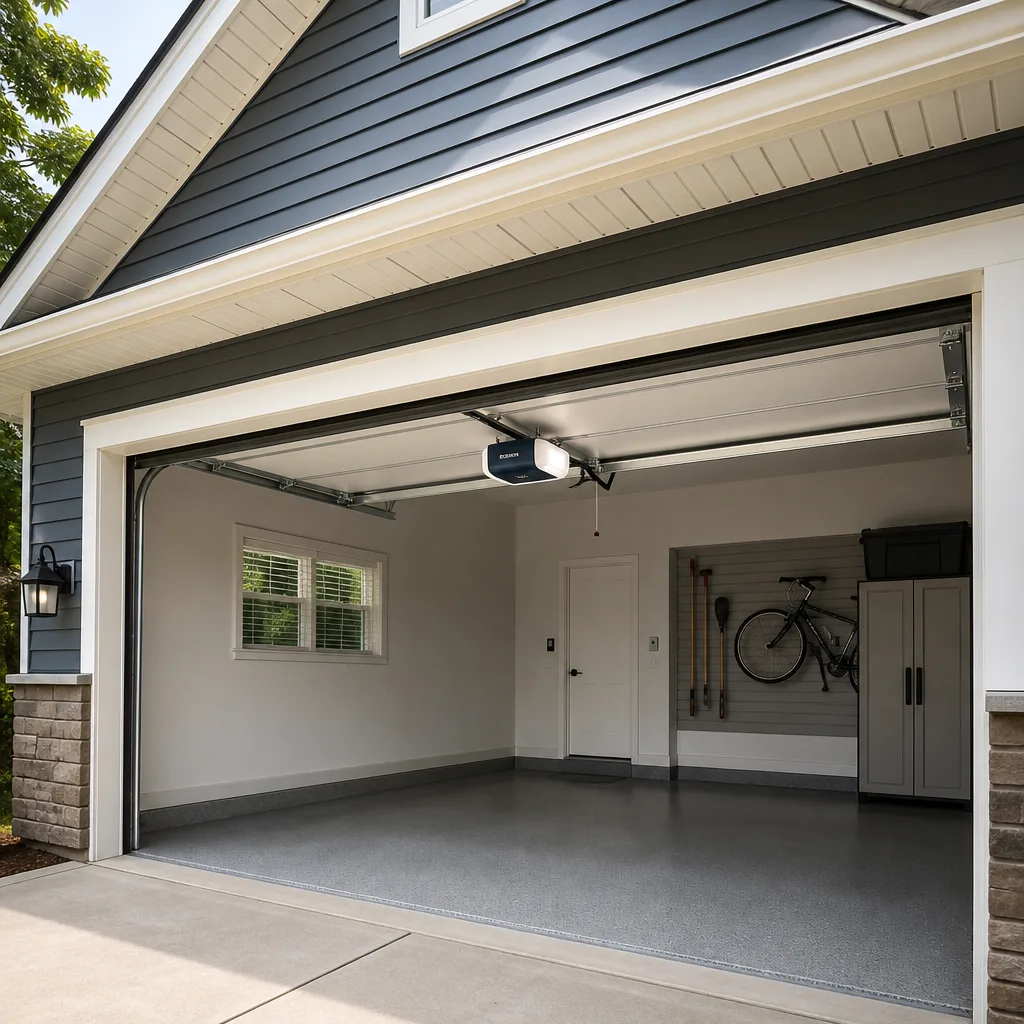 Chamberlain openers
Full 25-point door and opener safety check with every visit - springs, cables, rollers, tracks, and your LiftMaster or Chamberlain opener included
You get a price before we start. It does not change when the truck arrives.
Get your free estimateGarage Door Warning Signs: A Elk Grove Homeowner’s Reference Guide
A garage door that hesitates for two seconds before moving isn’t slow – it’s telling you the opener is working at the upper edge of its rated torque, which means the mechanical system underneath is already failing. Most homeowners in Elk Grove don’t catch this because the change happens gradually, week over week, until the door sounds a certain way and they simply accept it as normal. This guide teaches you to read the diagnostic language your door already speaks, and you can explore more guides & resources once you know the basics. By the time you finish, you’ll know which sounds mean minor wear, which motions signal failing components, and which three specific warnings demand a same-day call.
Styles & brands we work with
Quick Answer
The most common garage door warning signs in Elk Grove are grinding or squealing during operation, a door that hesitates before moving, uneven travel or visible gaps when closed, and an opener that reverses without cause—issues we cover in detail alongside our Seasonal Garage Door Care for Elk Grove: Year-Round Homeowner’s Guide. Sound warnings typically point to roller, hinge, or opener-gear wear, while motion warnings usually indicate spring fatigue or track misalignment. Three signs are same-day emergencies: a snapped cable, a door that drops when released from the opener, and a torsion spring with a visible gap in the coil.
Table of Contents
- Sound Warnings: Grinding, Popping, and Squealing
- Motion Warnings: Hesitation, Uneven Travel, and Drift
- The Manual Balance Test: What Deviation Actually Means
- Elk Grove Climate Warning Signs: UV Embrittlement and Fog-Season Rust
- Opener Behavior as a Diagnostic Tool
- Same-Day Emergencies vs. Planned Service Windows
- Common Mistakes to Avoid
- When to Call a Professional
- Frequently Asked Questions
- The Bottom Line
Sound Warnings: Grinding, Popping, and Squealing
Your garage door talks. The problem is that most homeowners in Elk Grove have never been taught the vocabulary. A grinding sound during operation is not the same as a squeal, and a squeal is not the same as a rhythmic pop. Each one points to a different system.
Grinding is the most serious of the three. When you hear a metallic grinding noise as the door moves along the track, the rollers are usually the culprit. Rollers wear down over time – the nylon coating chips away, the ball bearings inside seize, and the roller starts dragging instead of rolling. On a metal roller, the grinding is often the roller itself flattening against the track. On an opener, a grinding sound from the motor head usually means the drive gear inside is stripping. We’ve opened LiftMaster and Chamberlain units in Elk Grove garages where the gear teeth were worn to nubs, and the homeowner had been hearing the grind for months. A Genie screw-drive opener that grinds typically has a worn coupler or a dry screw rail.
Squealing is a friction signal. The most common source is a torsion spring that needs lubrication or is beginning to fatigue. Squealing can also come from hinges that have lost their factory grease or from rollers whose bearings have gone dry. A high-pitched squeal that happens at the same point in the travel every time often points to a specific hinge or roller location. You can narrow it down by watching the door and listening for the point in the cycle where the pitch peaks.
Popping is a different category entirely. A sharp pop or bang when the door is in motion usually means a cable is slipping on the drum, a hinge is binding, or a section of the door is flexing under load. In Elk Grove, where summer heat can cause metal components to expand and contract, popping sounds often get worse between June and September. A popping sound that occurs when the door is stationary but under tension – say, in the middle of the night – is sometimes the torsion spring micro-adjusting itself, which is an early indicator of metal fatigue.
One clarifying point: a garage door should not be silent. A low, consistent hum from the opener motor and a soft rolling sound from the rollers are both normal. What you’re listening for is change – a sound that wasn’t there six months ago, or a sound that’s gotten progressively louder.
Motion Warnings: Hesitation, Uneven Travel, and Drift
While sound warnings tell you something is wearing, motion warnings tell you something is failing. They’re more serious because they indicate the load-bearing system – springs, cables, or tracks – is no longer doing its job.
Hesitation is the two-second pause between pressing the wall button or remote and the door actually starting to move. A healthy garage door begins moving almost instantly. When there’s a delay, the opener’s logic board is sensing resistance and ramping up power gradually. That resistance comes from the door itself: springs that have lost tension, rollers that don’t roll freely, or a track that’s out of alignment. The opener is compensating, and it’s working harder than it was designed to. This is the warning sign we see most often in Elk Grove homes that have original builder-grade doors from the 1990s and early 2000s.
Uneven travel is visible when you stand inside the garage and watch the door move. Does one side lift before the other? Does the door appear to catch at a certain point and then jerk past it? Uneven travel almost always means a track alignment issue or an imbalance in spring tension. Left alone, uneven travel accelerates roller and hinge wear on the side doing extra work. A door that travels unevenly is also more likely to come off its track entirely, which is a dangerous failure mode.
Drift on disconnect is the single most important motion test you can perform, and it’s directly related to the manual balance test below. Pull the red emergency release cord and manually lift the door to about waist height. A properly balanced door will stay in place or move only slightly. If the door drifts downward, the springs have lost tension and the door is effectively heavier than the springs can counterbalance. If it drifts upward, the springs are over-tensioned. Either condition puts the opener motor under load it wasn’t rated for.
These three motion warnings – hesitation, uneven travel, and drift – account for the majority of the garage door repair calls we handle in Elk Grove. They’re also the easiest for a homeowner to overlook, because they develop over months rather than days.
The Manual Balance Test: What Deviation Actually Means
The manual balance test is the closest thing to a blood pressure reading for your garage door. It takes 60 seconds and tells you more about the condition of your springs than any sound or visual inspection.
- Close the garage door completely.
- Pull the red emergency release cord. This disconnects the door from the opener carriage.
- Manually lift the door to about waist height, roughly three feet off the ground.
- Let go. Watch what happens.
- If the door stays in place or drifts no more than two to three inches in either direction, the springs are within acceptable wear range.
- If the door drifts downward more than half a foot, or if it wants to drop quickly, the torsion springs have lost significant tension and are close to failure.
- If the door flies upward, the springs are over-tensioned and need adjustment – this is less common but equally important to correct.
- Lift the door fully, then lower it halfway and repeat the test at the halfway point. A door can pass at waist height but fail at mid-travel, especially with older spring sets.
A door that passes the balance test but still hesitates points to an opener or roller problem. A door that fails the balance test points to springs. This distinction matters because the fixes are completely different: replacing springs is a mechanical repair, while replacing rollers or adjusting the opener is a different service category entirely.
One caution about the balance test: it tells you about spring health, but it doesn’t tell you about cable health. We’ve seen doors in Elk Grove that passed the balance test with flying colors, then dropped a cable two weeks later because the cable was fraying inside the drum where you can’t see it. The balance test is one diagnostic tool, not the whole picture.
Elk Grove Climate Warning Signs: UV Embrittlement and Fog-Season Rust
Garage doors live outdoors in a way few other home systems do. In Elk Grove, the specific climate pattern – hot, dry summers with intense UV exposure followed by damp, foggy winters – creates two distinctive failure modes that a generic national guide won’t mention.
UV embrittlement on bottom seals. The rubber or vinyl weather seal on the bottom of your door takes direct afternoon sun for hundreds of hours each summer. Over time, the material loses its flexibility and begins to crack. You’ll see small splits along the edge first, then larger chunks flaking off. A cracked bottom seal lets in dust, leaves, and – during the wetter months – water. In Elk Grove neighborhoods like Laguna and Sheldon, where homes sit close to open fields, a cracked seal also invites rodents. The fix is straightforward: the seal is a replaceable component, and it’s one of the least expensive parts of a door system. But it’s also one of the most overlooked until water is pooling in the corner of the garage.
Fog-season rust blistering. Elk Grove doesn’t get coastal fog the way San Francisco does, but winter mornings here bring enough moisture to condense on metal surfaces. When that moisture settles on hardware that has lost its protective coating – hinges, brackets, cable drums – rust begins to form. The first sign is often small blisters under the paint on the door’s lower panels or on the hardware itself. Rust blistering on the torsion spring is particularly concerning because it weakens the metal at a structural level. A rusted spring is more likely to snap, and when a torsion spring snaps, it releases stored energy violently. If you see rust on your springs or cables, don’t wait for the spring to fail. Get it evaluated.
Both of these climate-specific signs are gradual. You’ll notice them first on south-facing and west-facing doors, which take the brunt of the afternoon sun and the morning moisture cycle. A door that faces north may not show these signs for years longer than one that faces southwest.
Opener Behavior as a Diagnostic Tool
Your opener is not just a motor. It’s a diagnostic instrument. The logic board inside a modern LiftMaster, Chamberlain, Genie, or Raynor opener is constantly measuring force, travel distance, and travel speed. When something changes mechanically with the door, the opener reports it through its behavior.
Reversal errors. When the door starts to close, then reverses and returns to the open position without any obvious obstruction, the opener’s down-force sensor is tripping. The official explanation is often “something in the path,” but in our experience the more common cause is the door itself getting heavier. Springs lose tension, the door gains effective weight, and the opener’s force limit – which was set when the door was lighter – now triggers a fault. The opener is telling you the door is heavier than it used to be. That’s a spring issue, not an opener issue.
Sensitivity faults. An opener that stops partway down, or that starts to close and then stops without reversing, is often reporting a track problem. The carriage encounters resistance at a specific point in the travel, and the opener’s sensors interpret it as an obstruction. You can sometimes locate the problem by watching exactly where the door stops – it’s almost always at the same height, which corresponds to a misaligned track section or a worn roller catching on a joint.
Force-limit resets. If you find yourself reprogramming the travel limits or force settings on your opener every few months, the opener isn’t malfunctioning. The door is changing. A door that requires progressively higher force settings to close is a door whose mechanical system is degrading. Each reset masks the underlying problem for a few more weeks. Eventually the opener either burns out its motor or the door fails in a more dramatic way.
These opener behaviors are the reason we tell Elk Grove homeowners to pay attention to anomalies rather than dismissing them as glitches. A garage door opener that reverses twice a month is not a glitch. It’s a measurement. The question is whether you read it and respond, or wait for the measurement to become a failure.
Same-Day Emergencies vs. Planned Service Windows
Not every warning sign requires immediate attention. Knowing which category you’re in prevents both panic and dangerous complacency. Here’s how we break it down for Artisan Garage Door Repair home service calls in the Elk Grove area.
Three signs that are same-day emergencies:
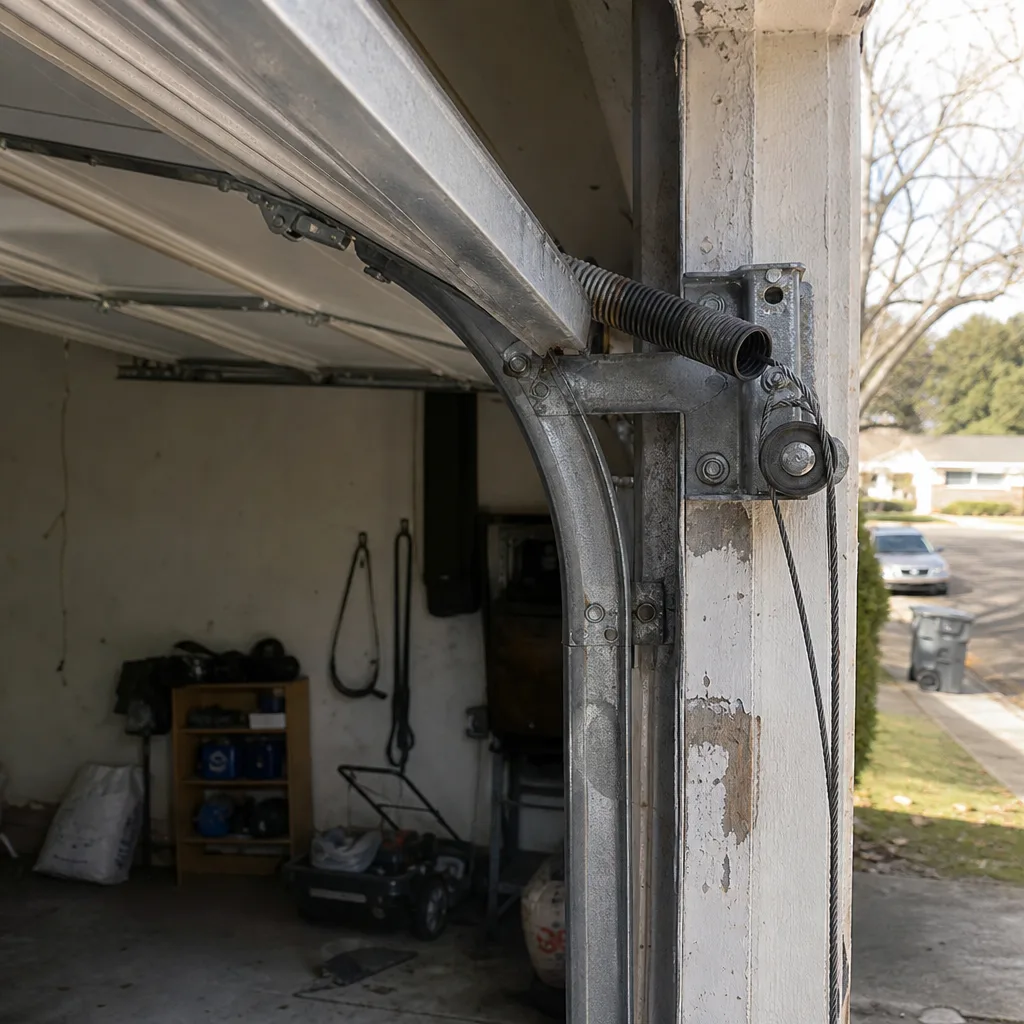
- A snapped or slack cable. If you see a cable hanging loose or notice the door is leaning to one side, stop using the door immediately. The remaining cable is now carrying the full load, and a door that comes off its track can fall. This is a dangerous condition.
- A door that drops when released from the opener. If you pull the emergency release and the door falls to the ground, the torsion spring has failed completely. The door weighs 150 to 250 pounds depending on size and material. A falling door causes serious injury. Don’t operate the door, and don’t try to lift it manually.
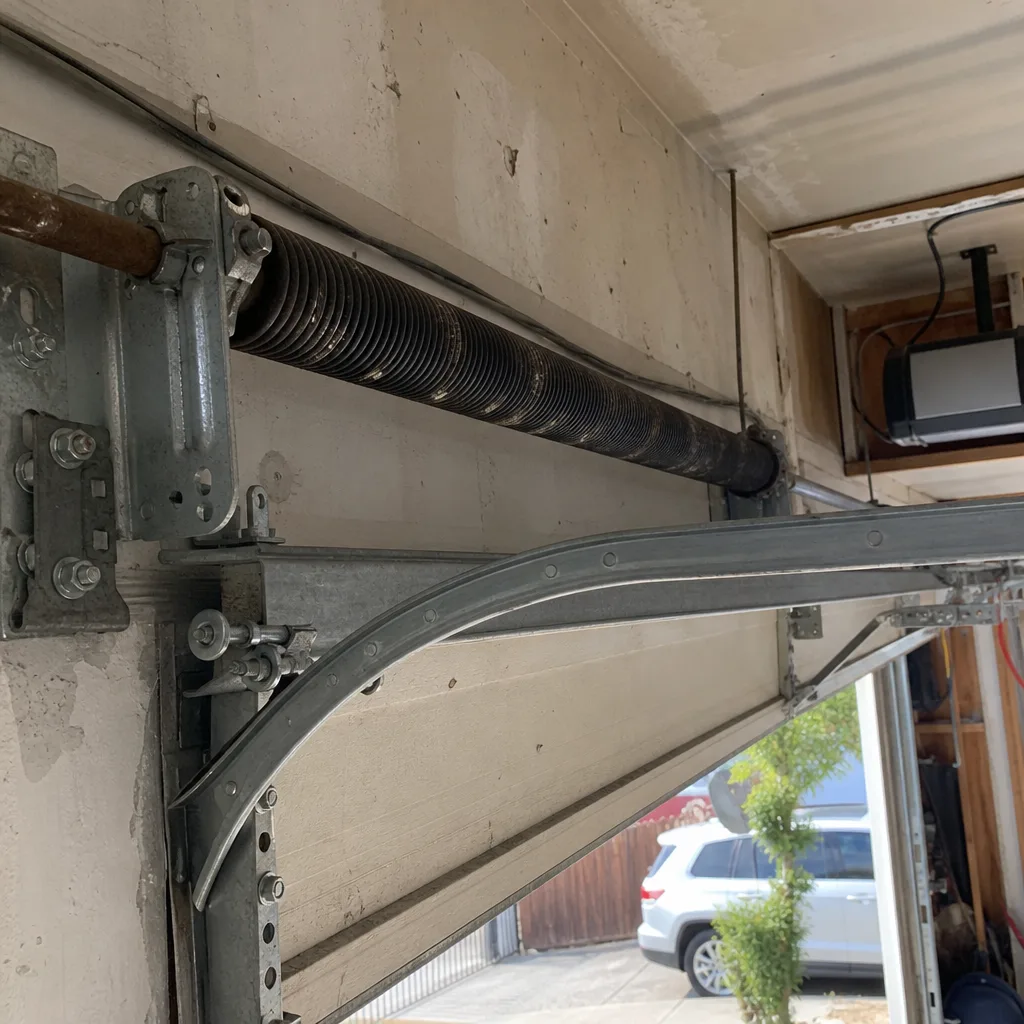
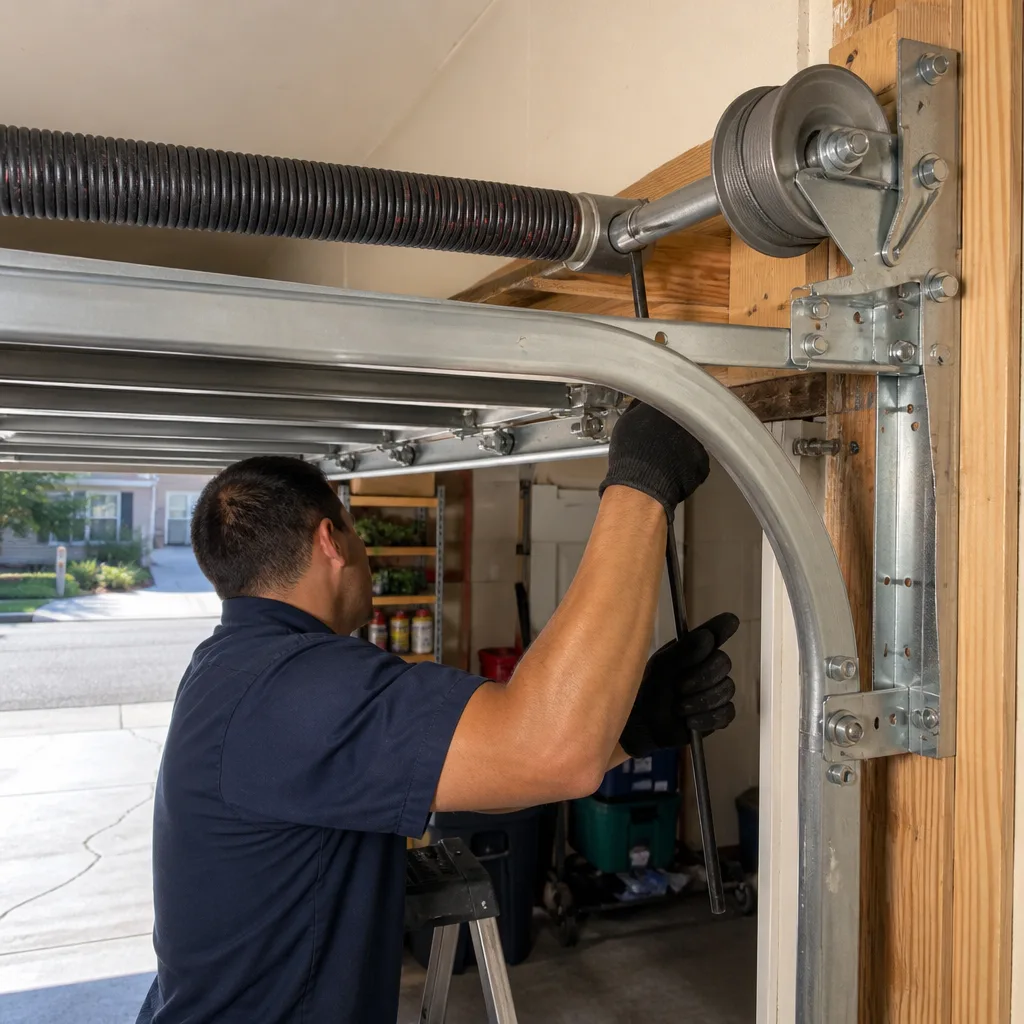
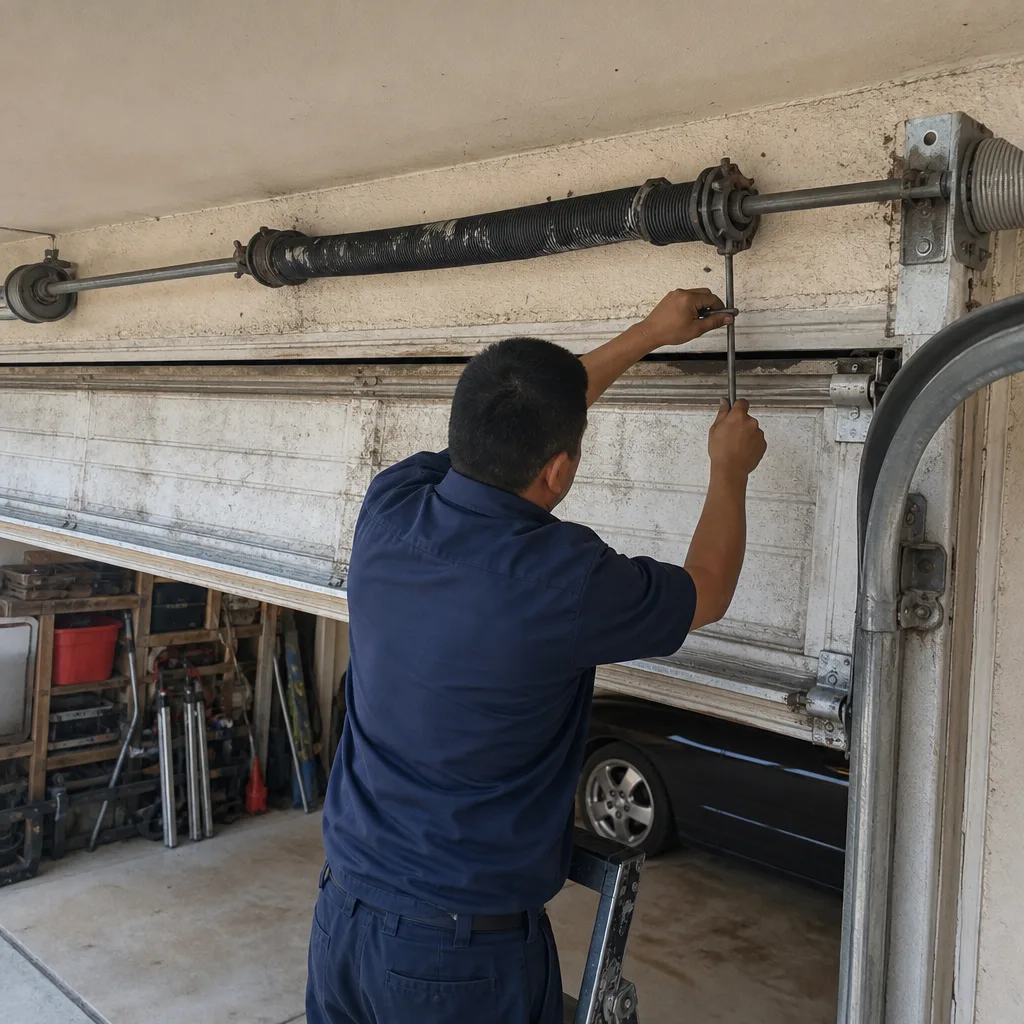
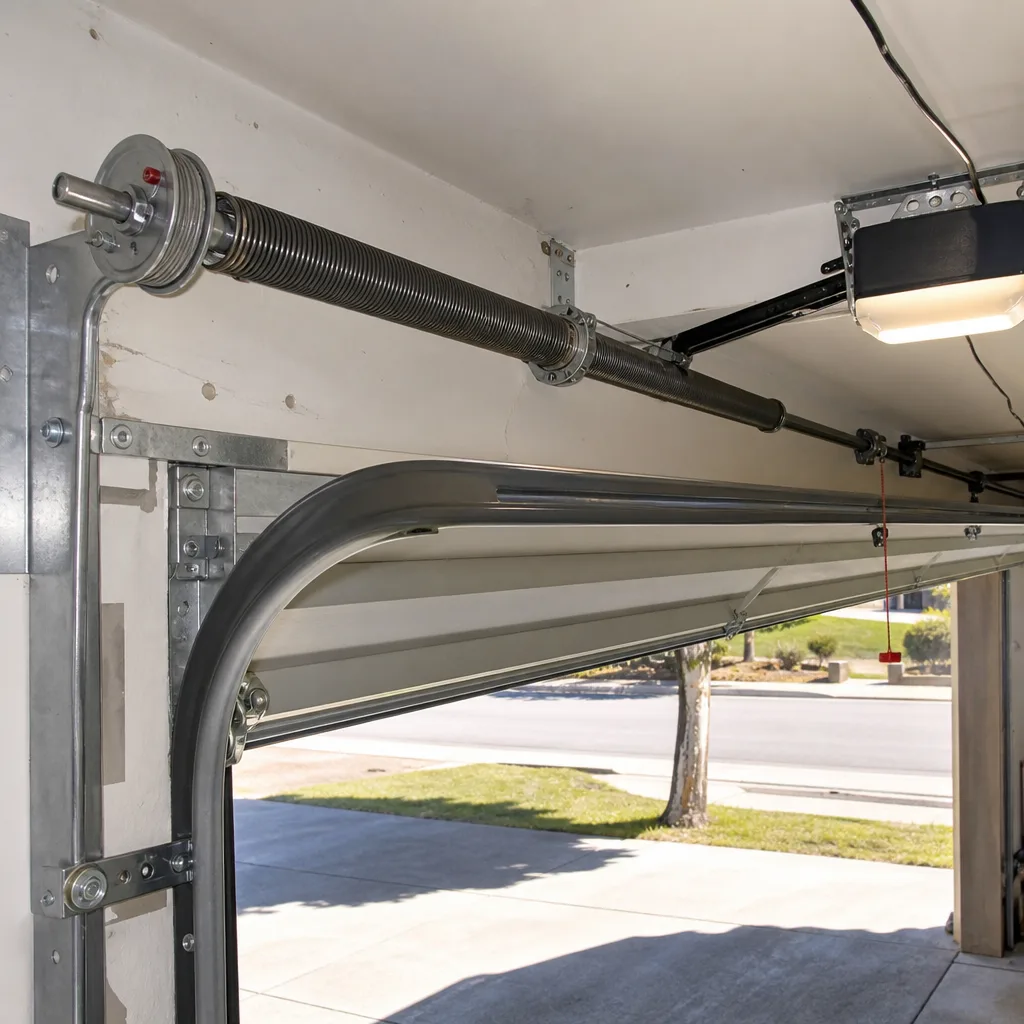
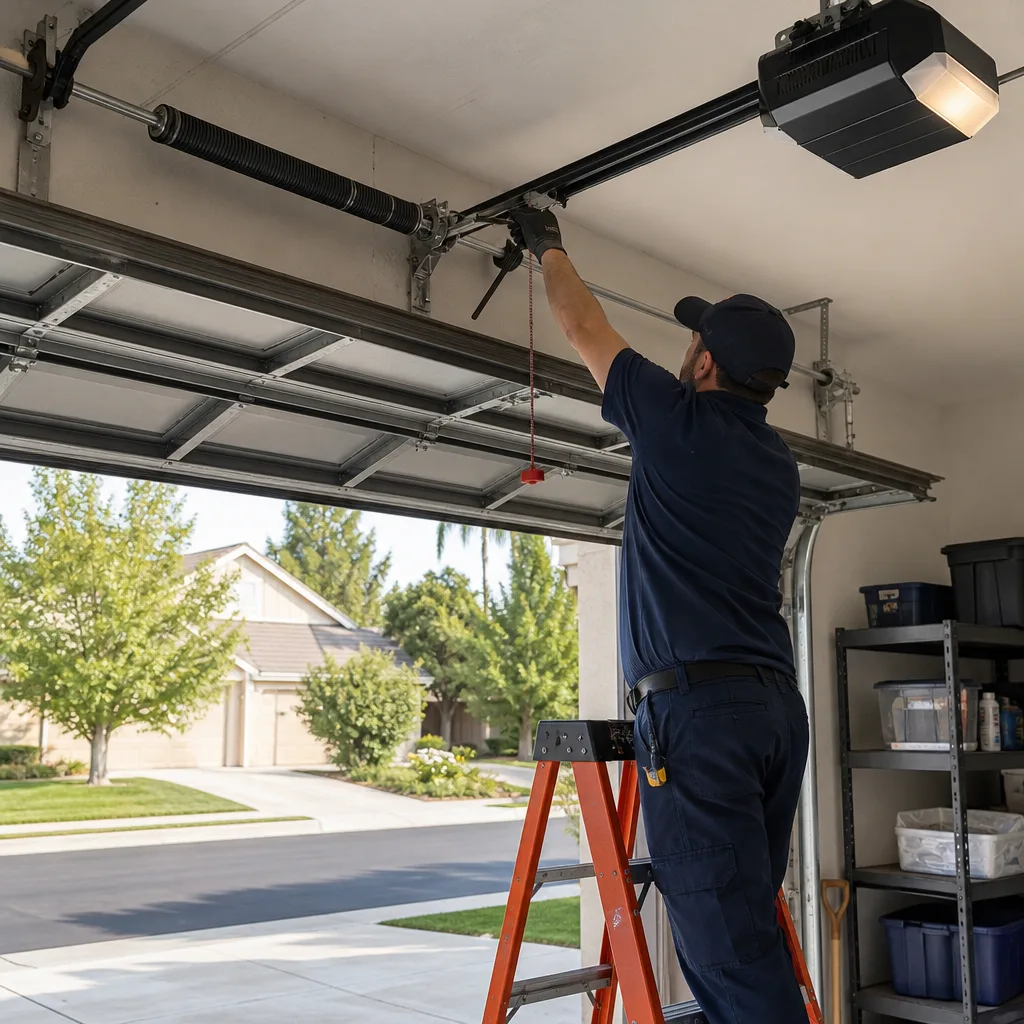
- A visible gap in the torsion spring coil. Torsion springs sit on a shaft directly above the closed door. When a spring breaks, you’ll typically see a two-inch gap somewhere along the coil. Sometimes you’ll hear the bang from inside the house. If you see the gap, the spring is done.
Signs that give you a service window:
- Grinding rollers (1 – 3 weeks before they cause track damage)
- Hesitation on start (2 – 4 weeks before the opener starts tripping its force limit)
- Squealing springs (several weeks – lubrication may resolve it, or springs may need replacement)
- Minor drift on the balance test (2 – 6 weeks, but don’t push past the upper end)
- Cracked bottom seal (cosmetic and functional, can wait for a scheduled visit)
- Rust blistering without structural compromise (schedule an evaluation)
The distinction between emergency and scheduled hinges on one question: is a load-bearing component actively failing, or is a wearing component getting noisier? Cables and springs are load-bearing. Rollers, hinges, and seals are wearing components. Load-bearing failures are same-day calls.
Common Mistakes to Avoid
- Lubricating a failing spring instead of replacing it. A squealing torsion spring that’s losing tension won’t be saved by spray lubricant. The lube quiets the symptom while the underlying fatigue continues. You’ve bought a few quiet weeks, not a fix.
- Adjusting the opener’s force settings to compensate for a heavier door. This is the equivalent of turning up the volume instead of fixing the speaker. Every force increase adds stress to the motor and the gear train. The door keeps getting heavier, and the opener keeps working harder until something gives.
- Ignoring a reversal error because there’s “nothing in the way.” The obstruction is often the door itself, and the reversal is the first measurable sign of spring fatigue. Waiting until the door won’t close at all turns a $200 spring replacement into a full opener replacement.
- Replacing one spring instead of both. Torsion springs are rated for a certain number of cycles, typically 10,000. If one spring on a two-spring door has failed, the other has the same cycle count and is close behind. Replace both, or you’ll be back in the garage in six months.
- Disconnecting the opener and continuing to use the door manually after a spring failure. A door with a broken spring is dangerously heavy. The emergency release is for testing and for moving the door during a power outage – not for daily use while a spring is broken.
- Painting over rust without addressing the underlying moisture issue. Surface rust on hardware in an Elk Grove garage often points to condensation or drainage issues. Paint hides the symptom for one season, then the blistering returns worse.
- Assuming an old door is “fine” because it opens and closes. Doors built before 1993 may not have the safety reversal systems required by current code. They can still operate while being genuinely unsafe. If your door predates the mid-90s, consider a garage door installation evaluation in Elk Grove.
When to Call a Professional
Call a professional the moment you see a snapped cable, a door that drops on disconnect, or a gap in your torsion spring. These are not repair-adjacent situations. They are load-bearing failures, and the risk of injury from DIY work is real. Torsion springs store enormous energy, and the tools required to safely replace them are specialized. Our technicians at Artisan Garage Door Repair work on whatever system is already in your home – LiftMaster, Chamberlain, Genie, Raynor, or any of the major brands – because the goal is fixing the door you have, not steering you toward a replacement you don’t need, though our Choosing the Right Garage Door Brand: A Buyer’s Guide for Elk Grove can help if the time ever comes. Artisan Garage Door Repair offers free estimates in Elk Grove – call (855) 631-8980 to schedule one, or to get a same-day assessment for an active emergency.
Frequently Asked Questions
Most garage door repairs in Elk Grove fall between $150 and $450, depending on the component. Roller replacement typically runs $120 – $200, spring replacement $250 – $450 for a pair, and opener gear replacement $180 – $280. Exact pricing depends on the door model, spring size, and whether the job requires same-day dispatch. Call (855) 631-8980 for an exact quote – estimates are free, and the price is always quoted and agreed before any work starts.
Yes. We keep same-day availability for emergency calls in Elk Grove, specifically for snapped cables, broken springs, and doors that have come off their tracks. If your door simply won’t open and you’re not sure which category you’re in, call (855) 631-8980 and describe the symptoms. We’ll tell you honestly whether it’s a same-day situation or something that can wait for a scheduled visit.
No. We quote the repair based on the symptoms you describe, confirm the diagnosis when we arrive, and agree on the price before any work begins. If the on-site evaluation reveals a different problem, we show you what we found and give you a new number before turning a single wrench. You’re never committed to a repair you didn’t approve.
In most cases, yes. Our trucks are stocked with common spring sizes, roller sets, hinges, cables, and opener parts for the brands we service – LiftMaster, Chamberlain, Genie, and Raynor among them. If your door requires a non-standard part, we’ll give you a time frame for ordering it and schedule the follow-up.
Hesitation on start. Most people notice a grinding noise eventually, but a two-second delay before the door moves is easy to dismiss as normal. It isn’t. Hesitation is the opener reporting increased mechanical load, and it’s usually the first measurable sign of spring fatigue or roller failure.
It depends on the noise. Squealing and occasional pops from the track are usually safe in the short term, though they indicate wear that will worsen. Grinding from the opener motor is more concerning because it often signals a stripping drive gear – and when that gear fails completely, the door may stop mid-travel. If you hear grinding from the motor head, schedule service sooner rather than later. If you hear a loud bang and see a gap in the spring, stop using the door immediately.
Yes. A properly balanced garage door should feel light to lift manually – roughly 10 to 15 pounds of effort. If the door feels heavy on manual lift, the springs have lost tension and the opener is compensating. This is the condition that leads to premature opener motor failure. It’s also the condition that precedes a snapped spring, which is why the manual balance test matters. If the door feels heavy, get the springs checked before they fail.
The Bottom Line
Garage doors fail quietly first, then dramatically. The hesitation, the squeal, the drift on disconnect – these are the door’s way of documenting its own decline in real time. Learning to read those signals means the difference between a planned repair on a Tuesday afternoon and a snapped spring at 6 AM on a Monday with your car trapped in the garage. In Elk Grove, the climate adds its own variables: UV-hardened seals and fog-season rust that accelerate normal wear. If you’re noticing any of the warning signs in this guide, or if you’re not sure whether what you’re hearing is normal, schedule a diagnostic visit with our garage door opener repair team in Elk Grove. We’ll tell you exactly what’s wrong, what it costs to fix, and whether it can wait – no upsell, no pressure.
Written by the team at Artisan Garage Door Repair, serving Elk Grove since 2014.
See the difference
 Before
 After
 Before
 After
 Before
 After