
Last updated October 30, 2026
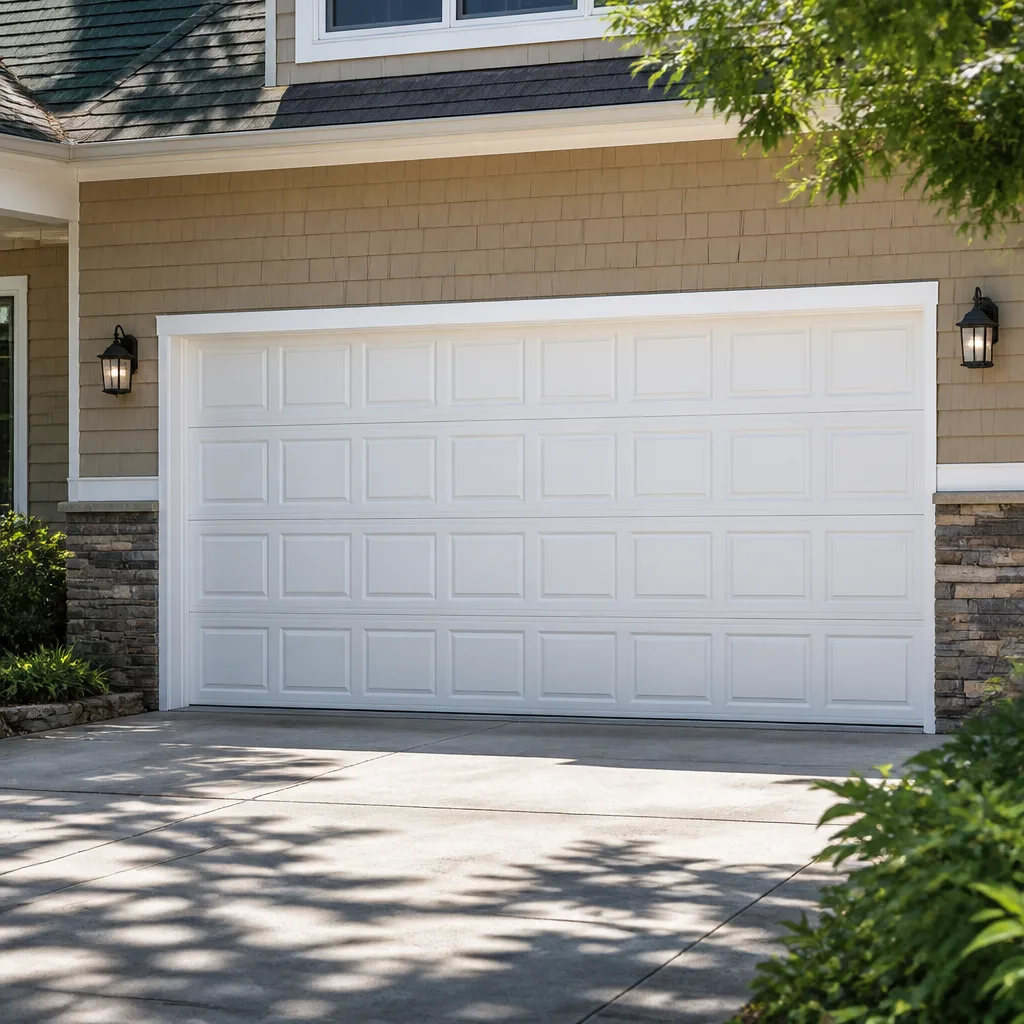 Raised-panel steel
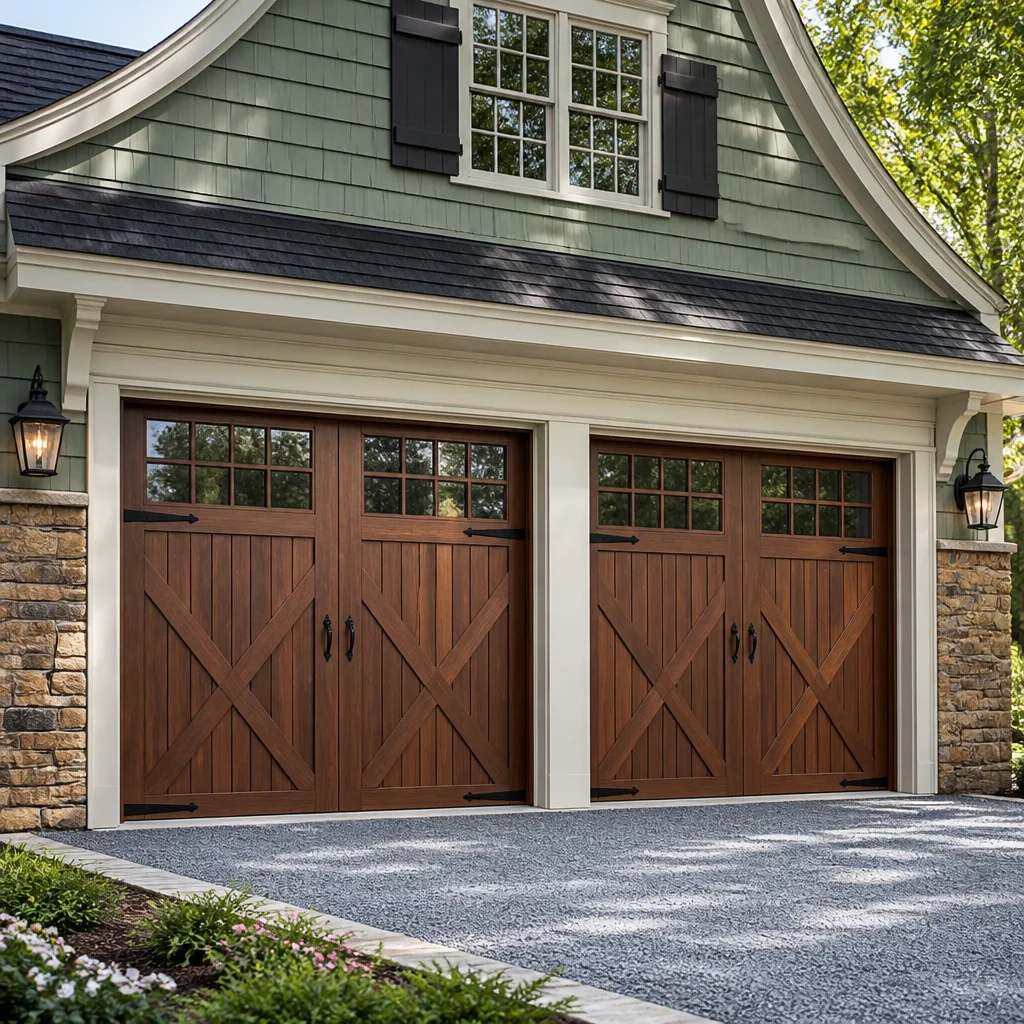 Carriage house
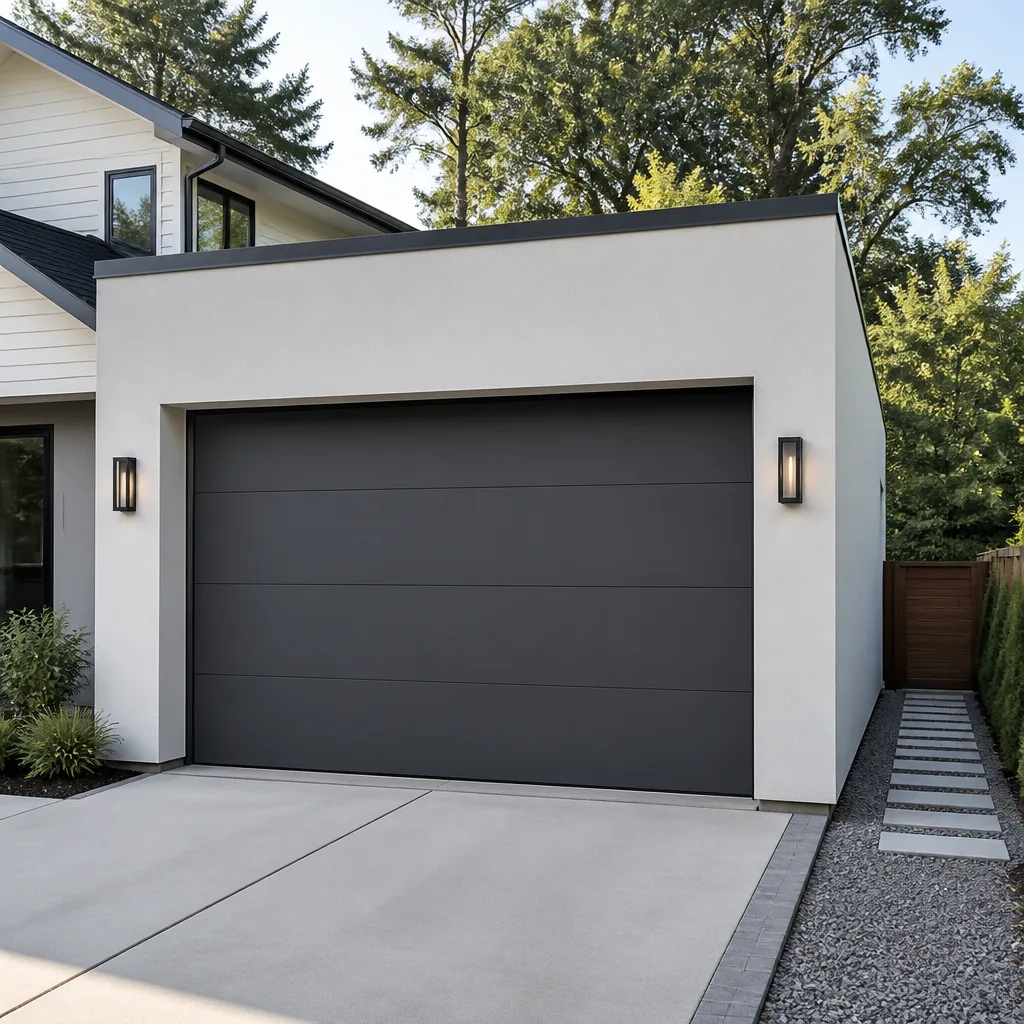 Modern flush
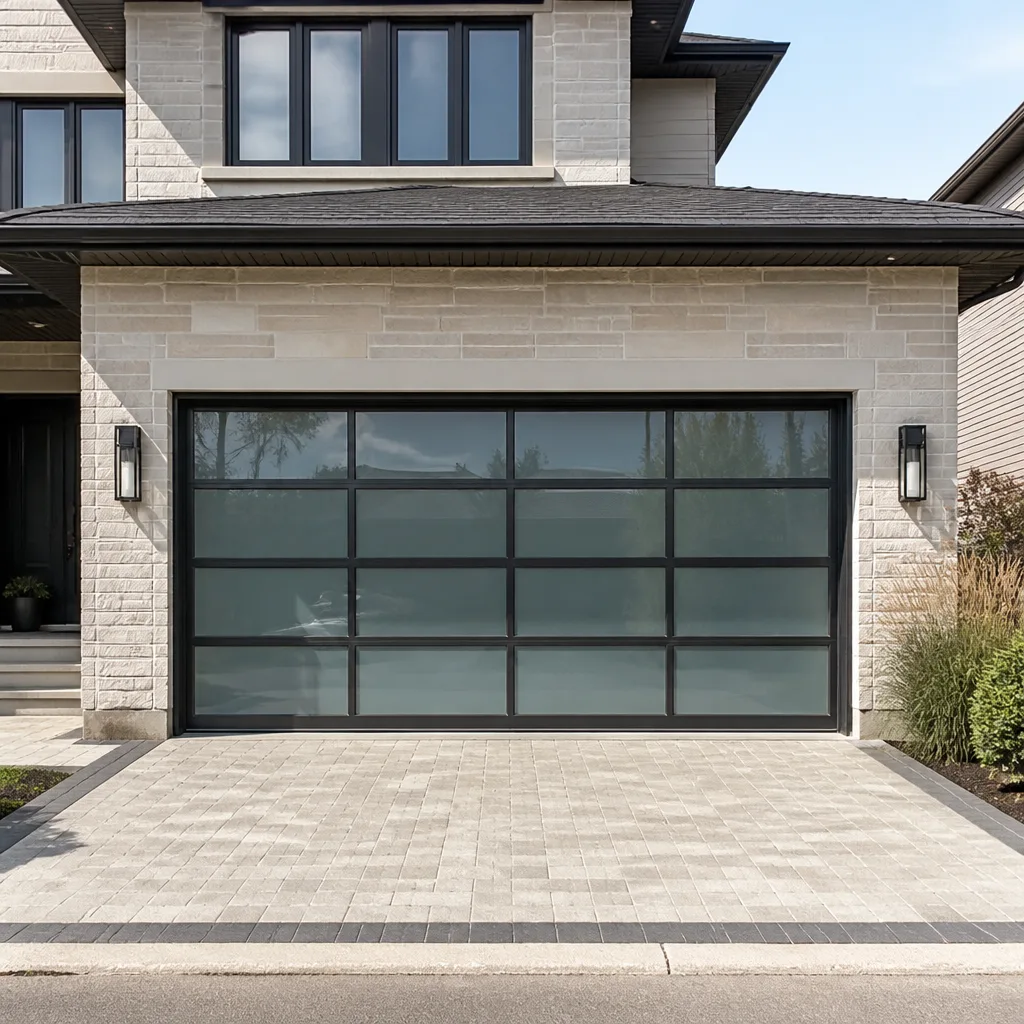 Full-view glass
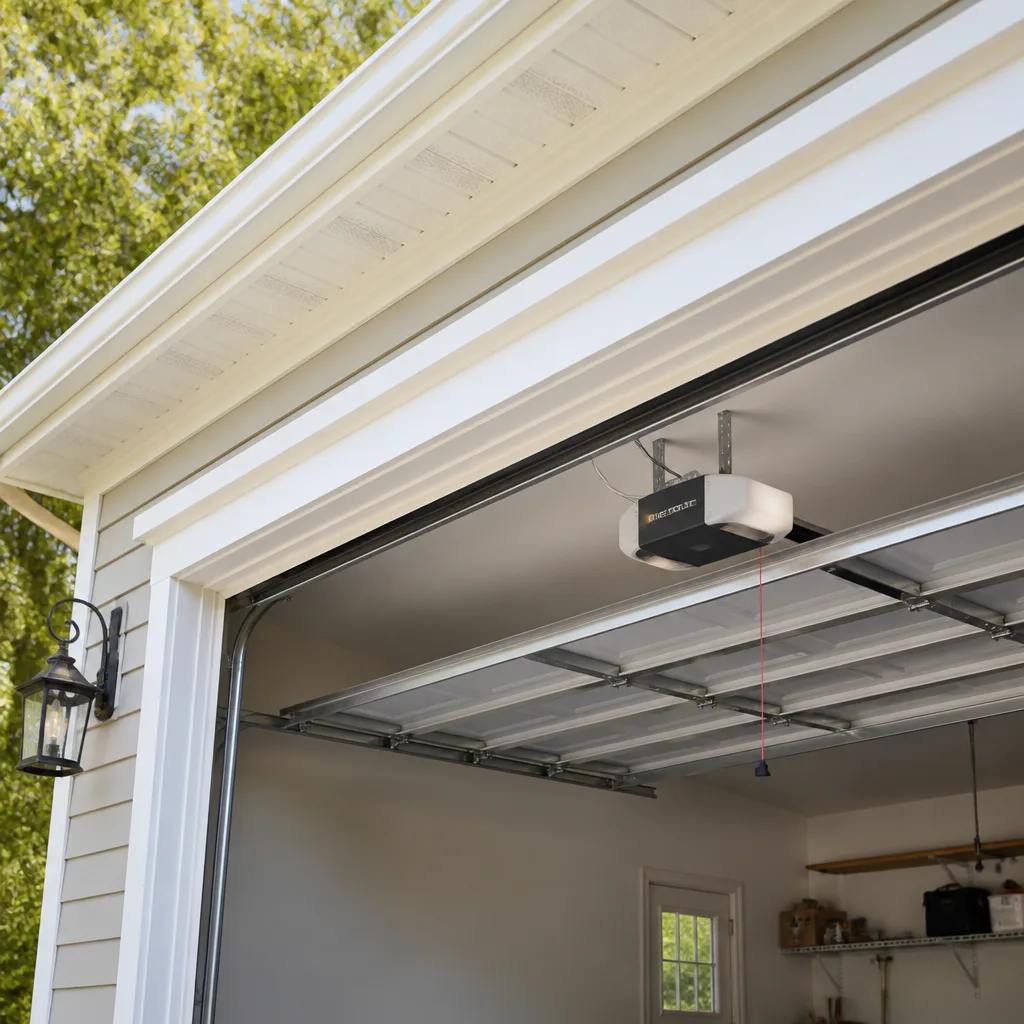 LiftMaster openers
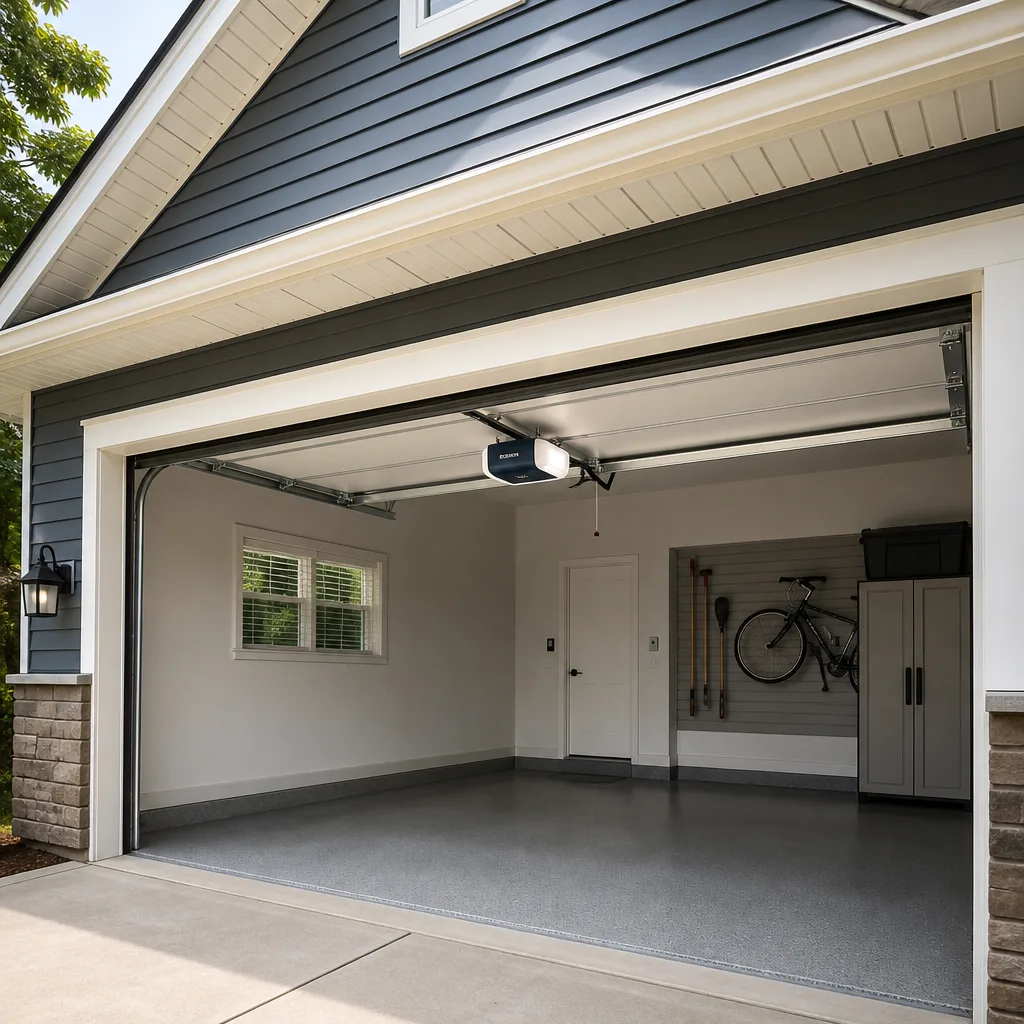 Chamberlain openers
Full 25-point door and opener safety check with every visit - springs, cables, rollers, tracks, and your LiftMaster or Chamberlain opener included
You get a price before we start. It does not change when the truck arrives.
Get your free estimateSeasonal Garage Door Care for Elk Grove: Year-Round Homeowner’s Guide
Here’s something most Elk Grove homeowners learn the hard way: the strongest seasonal force acting on a garage door isn’t rain, snow, or wind. It’s the temperature swing between a mid-August afternoon in Laguna West and a February morning wrapped in tule fog. In your garage, those 60-plus degree swings are doing real, measurable things to steel, rubber, and nylon: seals crack, grease thins or gums, torsion springs shift their rated strength. This guide explains exactly what to check, when to check it, and why Elk Grove’s two best maintenance windows are short enough that you should schedule them now.
Styles & brands we work with
Quick Answer
In Elk Grove, garage door maintenance works best as two focused visits per year: one in early spring (March to early April) and one in mid-fall (October to early November). These shoulder windows avoid the two periods that distort door behavior – extreme dry heat in summer and tule fog moisture in winter. You can handle basic lubrication, cleaning, and visual checks yourself; call a garage door specialist for spring inspection, cable wear, and any opener electrical issues, or consult The Complete Garage Door Repair Guide for Elk Grove Homeowners for more details.
Table of Contents
- Summer (June – September): Heat, UV, and Thermal Shutdown
- Fall (October – November): Elk Grove’s Prime Service Window
- Tule Fog Winter (December – February): Moisture and Why Springs Snap
- Spring (March – May): Damage Assessment and Reset
- Building a Two-Visit Annual Schedule That Fits Elk Grove’s Climate
- DIY Maintenance Checklist: What a Homeowner Can Safely Do
- Common Mistakes to Avoid
- When to Call a Professional
- Frequently Asked Questions
- The Bottom Line
Summer (June – September): Heat, UV, and Thermal Shutdown
Elk Grove summers run long and unapologetically hot. From June through September, daytime highs routinely push past 95°F, and a garage door facing west or southwest takes direct sun for six or more hours a day. What looks like a door simply sitting still is actually a system under sustained thermal load.
What heat does to your door
When a single-car garage door measures 90 to 110 pounds and a double door approaches 300, the torsion spring is doing the real work. Here’s the problem: steel springs lose a small percentage of their rated lift capacity when they sit above roughly 100°F. Your door’s spring was calibrated for a “resting” weight. When a hot afternoon shifts that spring’s tension slightly, an operator unit senses a small extra strain every time it opens or closes. Over the course of a single Elk Grove summer, the opener runs hundreds of cycles at slightly higher amp draw than the manufacturer intended. That’s premature wear on a component built for about ten to fifteen years of normal use.
UV degradation: the rubber parts are first to fail
Rubber, vinyl, and PVC weatherstripping do not handle our sun well. The bottom astragal – the wide rubber seal screwed or slid into a channel along the door’s lower edge – is the most UV-exposed part on the whole system. In Elk Grove’s dry heat, an astragal left outside without treatment can lose its flex in two to three summers. It starts to crack at the fold points. Hairline fissures let in dust, hot air, and the occasional confused beetle. Once it hardens, you lose the seal that keeps a garage floor edge clean and dry those rare times we do get rain.
Side and top vinyl trim is also at risk. It’ll look fine from a distance, but run a finger along it during a June walk-around: a chalky surface means UV breakdown is underway.
Opener thermal shutdown: a real behavior, not a rare defect
LiftMaster, Chamberlain, Genie, and other opener brands build thermal protection into their motor boards. When the internal board temperature reaches a threshold – common on a 102°F afternoon inside an uninsulated garage – the opener will refuse to run until it cools down. This is by design, not a broken unit. A homeowner who tries to open the door five times in a row and gets nothing is often seeing thermal cutoff, not motor failure. The fix is almost always relocation of the logic board to a better-ventilated position or adding cross-ventilation to the garage. Replacing the opener solves nothing if the garage is the problem.
Summer focus list for Elk Grove homeowners:
- Test the door in the early morning, before heat has soaked the garage. If it runs smoothly, your opener is likely tripping thermal protection in the afternoon, not failing.
- Inspect the bottom astragal for cracks or rigidity. A heat-softened seal will roll, fold, or detach from the channel.
- Watch for slowdown during opening. A door that hesitates or labors at 3 p.m. but runs fine at 7 a.m. is telling you the spring tension is drifting.
- Check that the safety sensors aren’t misaligned by door frame expansion. Heat causes minor frame creep; two sensors that barely aligned in May can miss each other by August.
In our experience, summer is when a neglected door most often gets replaced unnecessarily. An opener that thermally trips and a spring that’s tired from heat are both fixable. If you’re in Elk Grove and your door is sluggish in the afternoon but fine at dawn, getting a professional to evaluate the spring before September can save you a larger repair in December. Garage Door Repair in Elk Grove is a good starting point for that kind of inspection.
Fall (October – November): Elk Grove’s Prime Service Window
If you only do one maintenance period per year, make it October. This is the single most cooperative time for garage door work in Elk Grove: days are mild, mornings are sharp, and the tule fog hasn’t settled in yet. Lubricants stay in place. Metal is at ambient temperature. A door’s true balance is finally measurable.
Why October is the calibration month
The spring on your garage door is rated for a specific weight range. When a technician checks balance in the middle of July, they’re measuring against a spring that’s been heat-stressed; when they check in late November, the same spring has been cycling through cold-fog mornings. October gives a neutral reading. If you want an accurate picture of whether your door is well-balanced, schedule any inspection or opener adjustment in this window.
What to do in October
- Lubricate the rollers, hinges, and bearing plates. Use a silicone or lithium-based garage door lubricant – never WD-40. Spray the roller ball bearings, the hinge pivot points, and the spring’s end brackets. Wipe off excess; a wet garage door is a dust magnet, and Sacramento Valley dust is fine enough to stick.
- Run a balance test. Disconnect the opener using the red release handle, then manually raise the door halfway. If the door drops more than a few inches on its own, the springs are losing tension. A correctly balanced door will sit still at the midpoint with almost no drift.
- Check all mounting bolts and hinges for looseness. Elk Grove’s dry heat causes wood frames to shrink over summer, which sometimes loosens the lag bolts holding the door track to the frame. Snugging these by hand is safe; replacing a stripped lag bolt is a pro job.
- Clean the safety sensor lenses. A dry-climate coating of dust cuts the infrared beam’s range and can cause phantom reversals.
- Test the auto-reverse force setting. With the door open, lower it onto a 2×4 lying flat. The door should reverse before crushing the wood. If it doesn’t, the force limit needs professional adjustment.
October is also the right month to replace a worn bottom seal or make small hardware upgrades, because the cooler weather means new rubber won’t be distorted by heat before it settles.
If you have a door from a brand like Clopay, Raynor, or Amarr, follow the manufacturer’s maintenance interval in the owner’s manual – but know that the actual calendar in Elk Grove shifts slightly earlier than generic national advice. Most guides say “lubricate every 6 months” without telling you when. Here, the right months are early October and early March.
Tule Fog Winter (December – February): Moisture and Why Springs Snap
Elk Grove winter is not a season of snow shovels and frozen latches. It’s a season of persistent, cold, damp air – the tule fog that parks itself over the Delta for days at a time and keeps the south Sacramento County air dense with moisture even when it isn’t actually raining. For a garage door, this is quietly the most dangerous stretch of the year.
The fog cycle hits multiple parts of the door
A metal garage door track sitting in a fog-saturated garage collects a fine film of condensation every morning. That’s the nucleation point for rust. Most modern tracks are galvanized, so full corrosion takes many years; but the hardware – hinge pins, brackets, spring cones, cable drums – often uses less heavily coated steel. Small rust blooms there aren’t just cosmetic. A rusted hinge pin increases rolling friction. A rusted spring cone accelerates cable wear. Over a couple of winters, what starts as surface rust becomes a part failure.
Why springs snap in winter
Torsion springs are rated for a certain number of cycles, usually 10,000 to 20,000 for standard springs, with some higher-cycle models in the 30,000 range. But cycle rating is measured at room temperature. Real-world performance changes when the spring is cold, and cold steel is more brittle steel. In a fog-heavy January, a 7 a.m. opening means the spring is at its coldest. Add the tiny contraction of the metal overnight, and the first open of the day puts maximum stress on the spring at its lowest temperature. It’s no surprise that most spring failures we see in Elk Grove happen between December and February.
If your door was already struggling in October and you skipped the tune-up, a January morning snap isn’t bad luck – it’s a predictable outcome of accumulated stress.
Winter checklist for Elk Grove homes
- Wipe down the bottom 18 inches of both tracks with a dry rag once a month. If you see orange staining, that’s the beginning of rust.
- Inspect the bottom astragal again. Fog condensation pools at the floor edge. A cracked seal lets that moisture wick upward into the door’s interior, accelerating panel delamination on older steel doors.
- Listen for a sharp “crack” or “pop” when the door opens first thing in the morning. That’s often the first sign of a spring beginning to fatigue.
- Check weatherstripping around the frame. Elk Grove homes in older neighborhoods like Elk Grove Heights and Southside often have original weatherstripping that’s been baked by decades of summer sun and is now brittle in cold air.
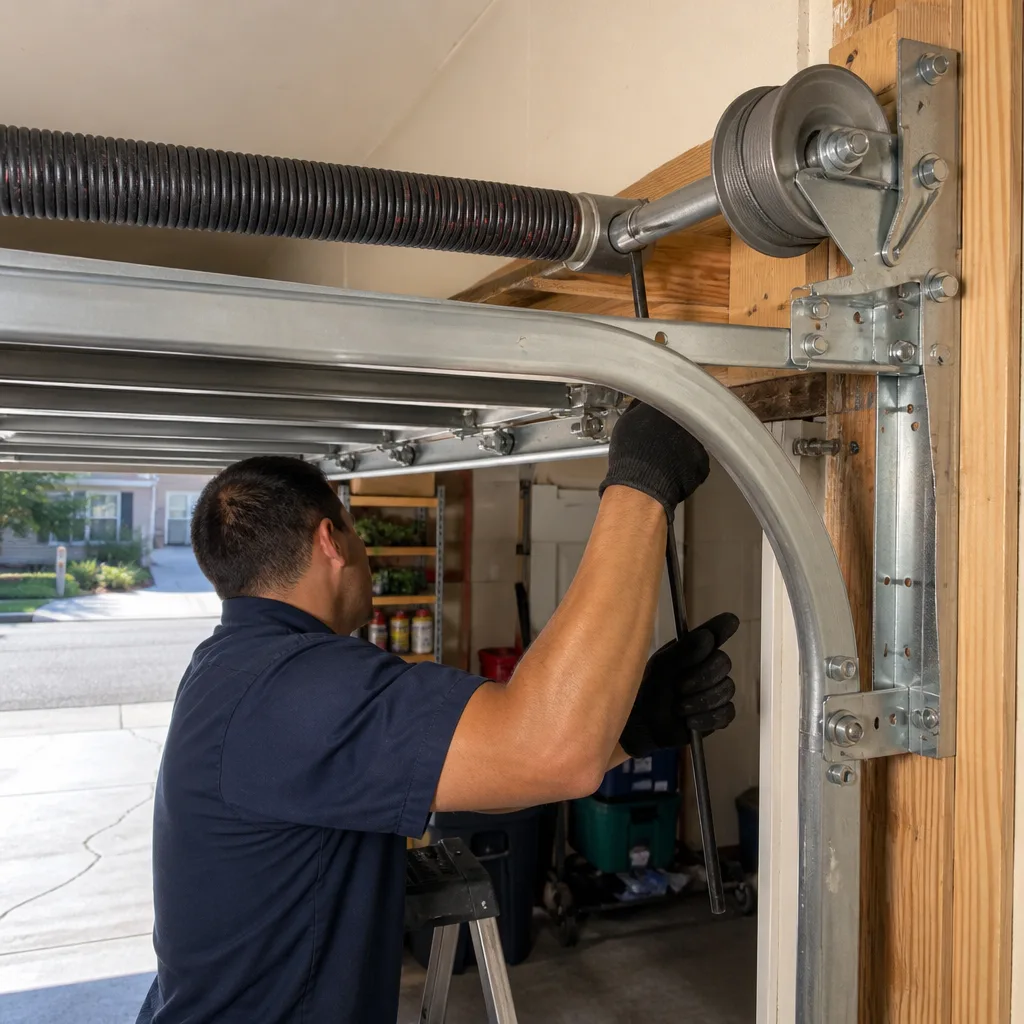
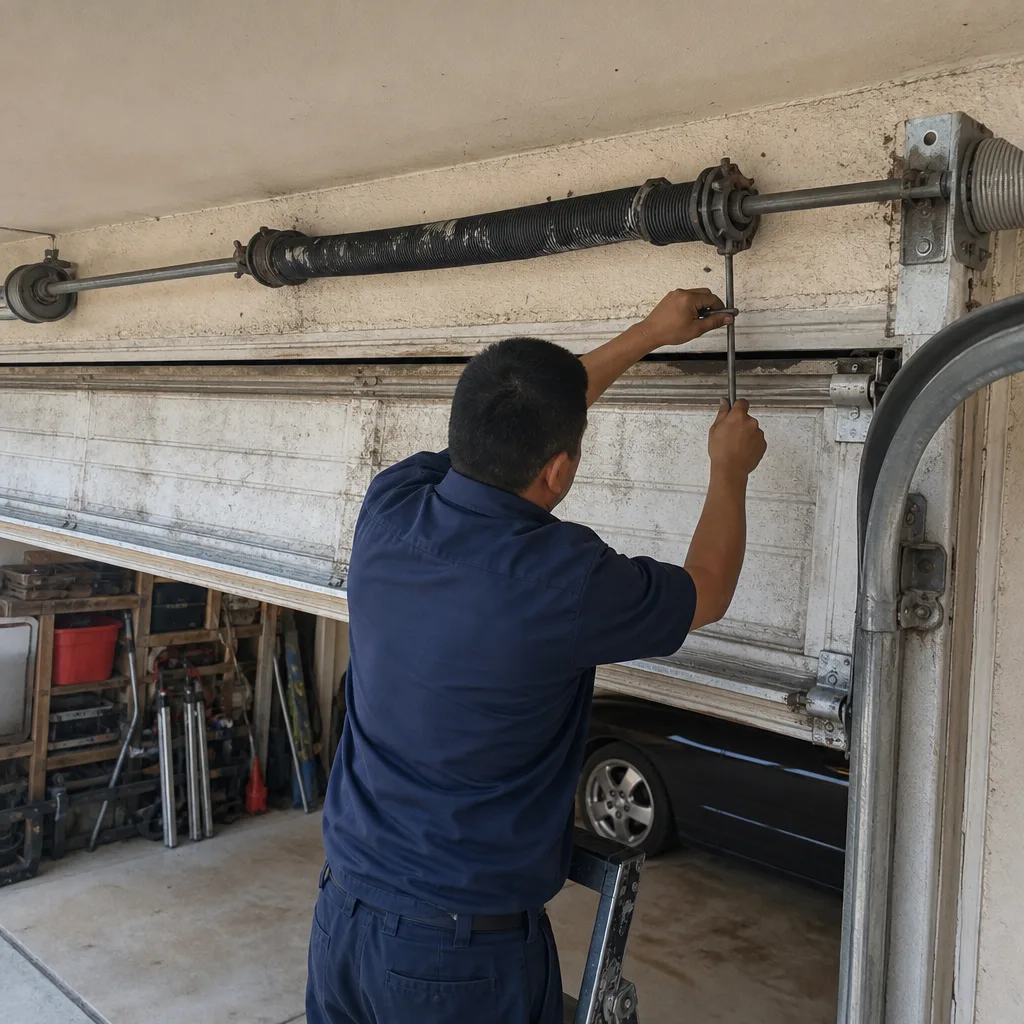
One thing to know clearly: a broken torsion spring is not a DIY fix. The stored energy in a wound spring can release suddenly and cause serious injury. If your door doesn’t open one cold morning and you see a visible gap in the spring above the door, leave the door closed and call a professional who works on the brand of spring you have – not a handyman who may not carry the right size. We work on every major brand – LiftMaster, Chamberlain, Craftsman, Raynor, and more – which means you don’t need to know the exact model before you call. Garage Door Repair in Elk Grove covers the diagnosis and replacement.
Spring (March – May): Damage Assessment and Reset
By early March, Elk Grove is usually shaking off the fog and starting to dry out. The spring window from March to May is the second of our two maintenance sweet spots. It’s a time to assess what the winter did to your door and decide what needs fixing before the heat returns.
What to inspect after fog season
- Check for rust blooms on all exposed steel. Use a wire brush on surface rust and touch up with a rust-inhibiting primer. This is a Saturday-morning task, not a pro call.
- Run the manual balance test again. Open the door halfway and release. If it’s drifting more than it did in October, the winter cold may have accelerated spring fatigue.
- Look for cracks in the panels themselves. Steel doors that absorbed fog moisture can develop hairline stress cracks at the panel edges. This is more common on older single-skin doors in Elk Grove’s original ranch subdivision homes.
- Verify the opener’s safety features. After months of cold, damp operation, the photo eyes and force limiter need a reset check.
- Check the weatherstripping on the sides and top. If you skipped a replacement in fall, this is your last comfortable window before dry heat returns.
Addressing last summer’s UV damage
By spring, any astragal cracking from the previous summer is fully visible. If the bottom seal has fissures or holes, replace it now; a compromised seal in May means dust intrusion in June and a fully deteriorated one by September. When a seal is hardened past saving, it’s an inexpensive service call and one that many garage door companies in Elk Grove can handle same-day or next-day. We carry seals for doors from Clopay, Wayne Dalton, Amarr, and the other major manufacturers on our trucks, so we don’t have to special-order and return.
Spring is also the sensible time to think about an opener upgrade, especially if your current unit is struggling with thermal shutdown in July. Replacing an opener in March means the unit has months of mild weather to settle before the first 100-degree stretch. If you already know the opener is the weak link, Garage Door Opener Repair in Elk Grove is the page that covers diagnosis and replacement on all major opener brands.
Building a Two-Visit Annual Schedule That Fits Elk Grove’s Climate
Most national garage door guides give a generic four-season calendar. In Elk Grove, that’s the wrong model. We don’t have a true winter, and our summer is more like a six-month dry spell. A two-visit schedule, timed to our climate reality, is more effective than spreading minor tasks across four arbitrary quarters.
Visit one: early March (spring reset)
- Full rust inspection of tracks, hinges, and spring hardware.
- Balance test and opener force-limit recheck.
- Astragal replacement if winter fog accelerated deterioration.
- Lubrication of rollers, hinges, and springs for the coming dry season.
Visit two: early October (pre-fog prep)
- Complete lubrication and hardware tightening after summer’s heat cycle.
- Safety sensor alignment and cleaning before shorter daylight hours limit visibility.
- Weatherstripping replacement before fog season locks in moisture.
- Bearing plate and cable inspection – the most common winter failure points.
You can do most of the lubrication and visual work yourself. The balance test, cable inspection, and any opener electrical work should be handled by someone who does this every day. A professional tune-up in October will cost far less than a January spring replacement, and it also prevents the kind of mid-summer opener failure that leaves a door stuck open or closed at the worst possible time.
If you’re considering a new door rather than maintaining the current one, the early fall window is also the least disruptive time to schedule a full installation. The work is measured and scheduled; it isn’t an emergency call. Garage Door Installation in Elk Grove walks through the process and what to expect, including whether your existing opener can be reused with a new door.
DIY Maintenance Checklist: What a Homeowner Can Safely Do
There’s a clear line between what’s safe to do yourself and what isn’t. This list is the safe side of that line. If you follow it twice a year, your door will last longer and your service calls will be smaller.
Safe DIY tasks
- Lubricate: Use a garage door-specific spray lubricant on rollers, hinges, and spring bearings. Apply lightly; oozing grease attracts dust.
- Clean tracks: Wipe with a dry rag. Don’t use lubricant on the tracks themselves – it creates a surface for grit to stick.
- Check visual alignment: Standing outside, look across the door line. The door should be parallel to the frame, not skewed to one side.
- Test the auto-reverse: Place a roll of paper towels under the closing door. It should reverse on contact.
- Listen: Open and close the door twice, standing inside. Squealing indicates dry rollers. Grinding is worse – a roller may be binding in the track.
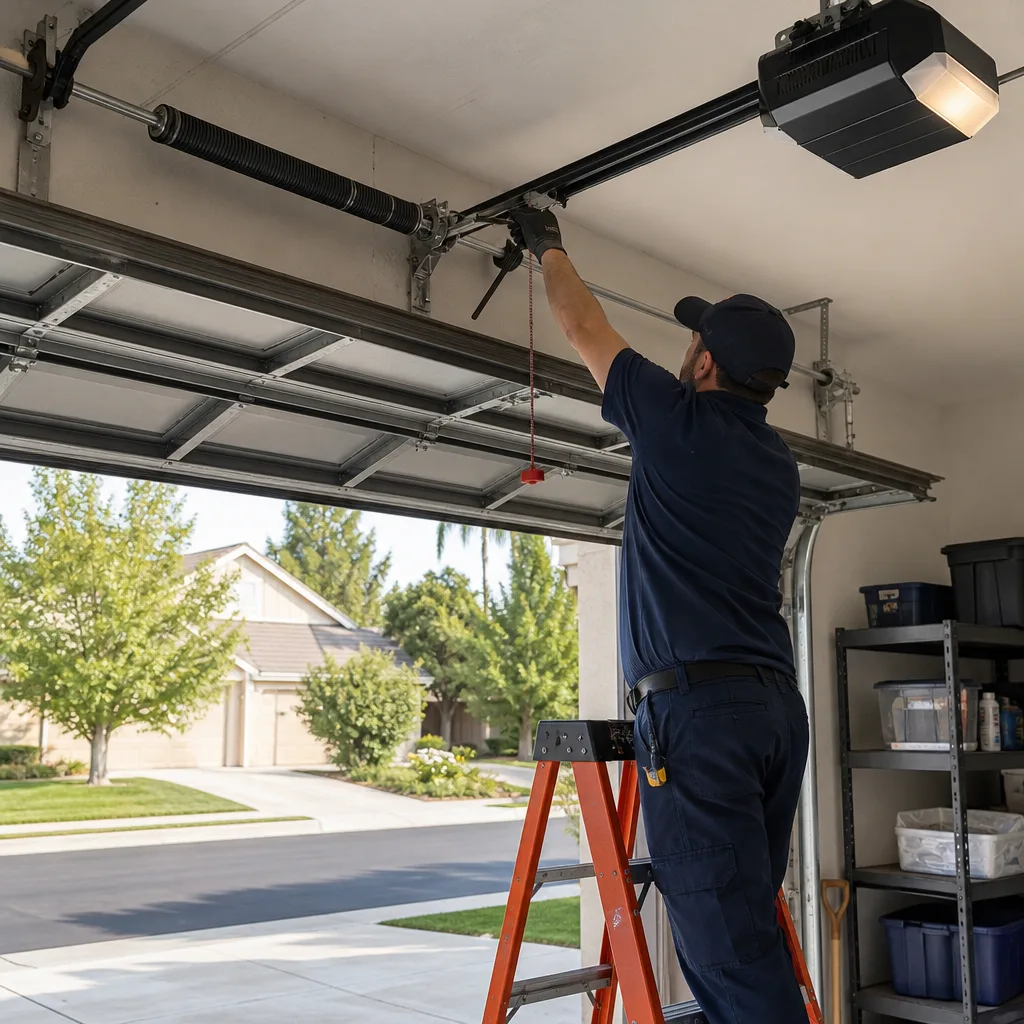
- Inspect the cables: Look at the lift cables on each side. They should be taut and free of fraying. But do not touch or adjust them.
Do not attempt these yourself
- Torsion spring adjustment or replacement: The springs store significant mechanical energy. A sudden release can cause severe injury.
- Cable repair: Cables ride through pulley systems under high tension. A snapped cable becomes a projectile.
- Track realignment: A track bolted out of alignment can bind and cause the door to jump a roller. The adjustment involves structural corrections, not a simple hand tool fix.
- Opener logic board repair: Modern operator units from brands like Genie, LiftMaster, and Chamberlain use integrated boards that can’t be safely opened by a homeowner for repair.
When in doubt, the guideline is simple: if a part is under tension, connected to the door’s weight, or carries electrical current, leave it to someone trained to work on that specific brand. We work on all of them. That’s the point of brand-agnostic service: you shouldn’t have to diagnose whether your spring is a 218 or 225 before you can ask for help.
Common Mistakes to Avoid
- Skipping October maintenance because the door “seems fine.” A door that’s been slightly out of balance since August will feel normal until the first cold snap. By then, replacement has already become a January emergency.
- Using WD-40 as a garage door lubricant. It’s a solvent and water displacer, not a lasting lubricant. It washes away the thin grease that hinge pins need, leaving them drier than before.
- Replacing an opener when the thermal shutdown trips. If your opener only fails during 100°F-plus afternoons, the garage is likely insufficiently ventilated. A new opener will trip the same way. Ventilation or a board relocation is the fix, not a new unit.
- Lubricating the track itself. Tracks should stay dry. Lubricating them turns the track into a dirt-collection channel, which increases roller resistance instead of reducing it.
- Hand-tightening a torsion spring. Some YouTube videos imply this is a 10-minute task. It’s the single most common source of serious garage-door injuries. No amount of saved money is worth a trip to urgent care.
- Waiting until a door fails completely to investigate a strange noise. Popping, grinding, or a “lurch” on startup are all early warnings. The repair bill for an ignored noise is usually three to five times the cost of the early fix.
- Assuming all garage door companies work on your brand. Some technicians specialize in one or two manufacturers. Ask before you schedule. If a company can’t name the brands they train on, you may be paying them to learn on your door.
When to Call a Professional
A garage door that won’t open is an inconvenience. A garage door that opens without warning, reverses on its own, or releases from the track is a hazard. Call a professional when you see a broken spring or cable, when the door jerks unevenly, when the opener emits a grinding or sparking sound, or when the door won’t stay closed. These aren’t tune-up issues; they’re structural or electrical failures, and they need a trained set of eyes. Artisan Garage Door Repair offers free estimates in Elk Grove – call (855) 631-8980 and we’ll tell you plainly what needs fixing, what can wait, and what it costs before any work starts.
Frequently Asked Questions
Twice a year: once in early March and once in early October. Those windows coincide with Elk Grove’s moderate shoulder seasons and give you the most accurate readings on spring balance and weatherseal condition. Generic national advice says “every 6 months” without tying it to local climate; in Elk Grove, those two months are the right ones.
Brand matters less than installation and ventilation. We regularly service LiftMaster, Chamberlain, Genie, Craftsman, and Raynor openers across Elk Grove, and all of them can thermal-trip when installed in a poorly ventilated garage that hits 105°F. A properly installed unit with good airflow will outperform a “premium” brand stuffed into a sealed hotbox.
Yes – our service area covers Elk Grove and we run calls throughout the week, including emergency spring and cable failures. Call (855) 631-8980 for current availability. We carry parts for the major brands on our trucks, so most spring replacements and opener repairs are one-visit jobs.
Expect spring replacement in the Elk Grove market to run approximately $180 to $340 for a single spring, including parts and labor, with two-spring jobs typically $250 to $450. The exact price depends on the spring’s size, cycle rating, and the door’s weight. We quote the full price before work begins – there’s no surprise line item when the job’s done.
No. We quote the job before starting work, and the price you approve is the price you pay. If we discover something additional that needs attention, we’ll show you and get your approval before adding any charges. That’s the standard we hold ourselves to as an Artisan-level shop.
We work on all major garage door and opener brands – LiftMaster, Chamberlain, Genie, Clopay, Amarr, Wayne Dalton, Craftsman, and Raynor. You don’t need to check your brand before calling. If you have a door or opener already installed, we’ll service it.
It depends on the panel material and overall condition. A 15-year-old solid-core steel door with good panels is often worth repairing; the springs and opener can be replaced for far less than a full system. A 15-year-old single-skin door with rust through the panel seams is usually approaching the end of its useful life. We’ll give you an honest recommendation either way – our interest is in the right long-term fix, not selling a new door to someone who doesn’t need one.
The Bottom Line
Elk Grove’s garage doors live in two extremes: punishing dry heat that eats rubber seals and pushes openers to thermal shutdown, then a fog season that attacks steel with condensation and makes cold springs brittle enough to snap. The solution isn’t quarterly tinkering; it’s two well-timed visits a year, one in March and one in October, focused on the parts that actually fail in our climate. Handle the lubrication, cleaning, and visual checks yourself. Call a garage door specialist for anything under tension or carrying current. That division of labor keeps a door running for the full span it was built for – and catches small problems before they become the kind that leave a car stuck inside on a 104-degree afternoon.
Written by the team at Artisan Garage Door Repair, serving Elk Grove since 2014.
See the difference
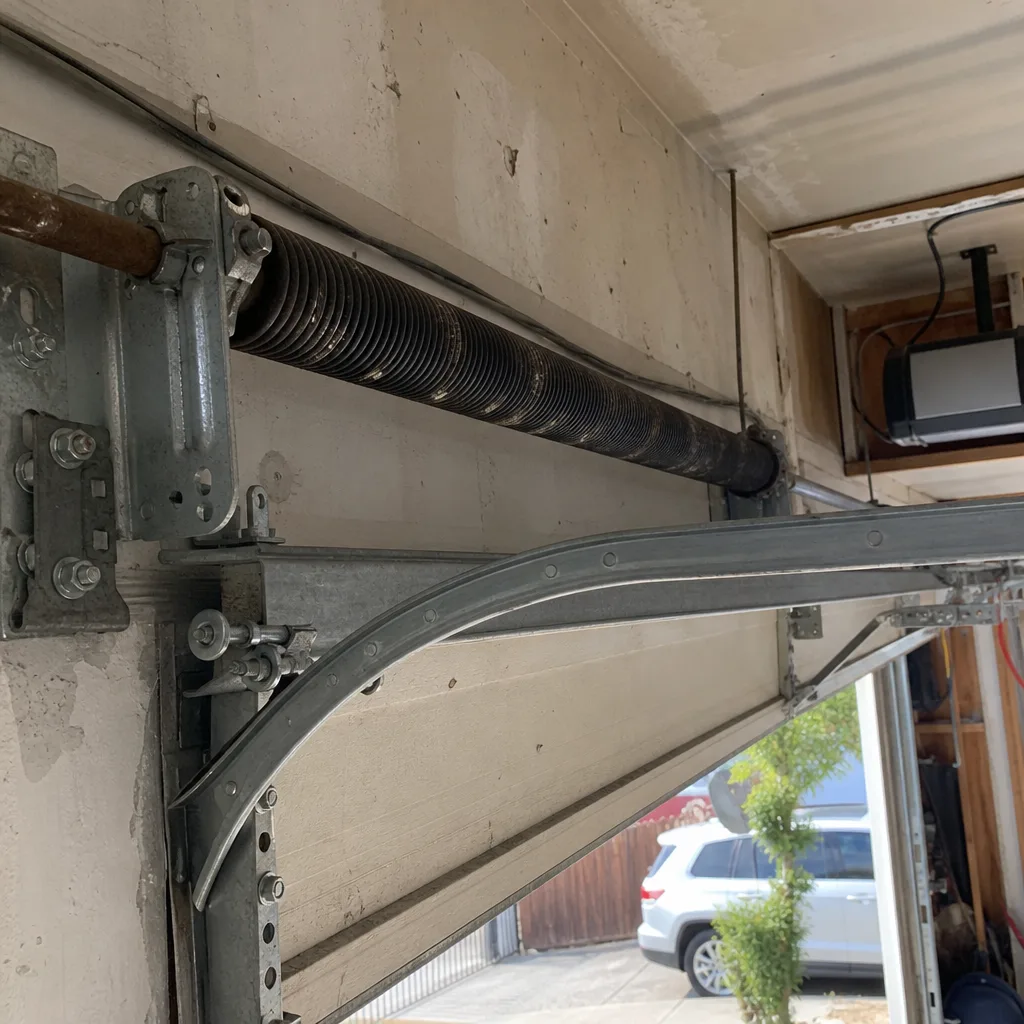 Before
 After
 Before
 After
 Before
 After